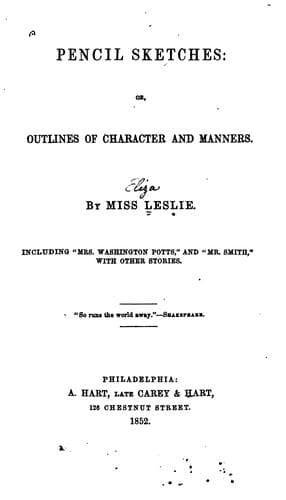
Pencil Sketches; or, Outlines of Character and MannersLeslie, Eliza
General
Pencil Sketches; or, Outlines of Character and Manners
Leslie, Eliza
Humorous stories; Short stories, American; United States -- Social life and customs -- 19th century -- Fiction
"_They_ have certainly changed for the worse," remarked Lindsay. "I
remember the Newmans very well--a happy, homely family living in a long,
low, red frame house, and having everything about them plain and
plentiful."
"So had we in our former dwelling," said Mr. Hilliard, "yet I think we
are living still better now."
"I have many pleasant recollections of the old house," said Lindsay.
"For you," observed the farmer, "our old house and the manner in which
we then lived, owed most of their charms to novelty, and to the
circumstance that children are seldom fastidious. I doubt much, if you
had found everything in _statu quo_, and the old house and its
inhabitants just as you left them, whether you could have been induced
to make us as long a visit as I hope you will now."
"My husband," said Mrs. Hilliard, "is different from most men of his
age. Instead of dwelling all the while upon old times, he stands up for
the times we live in, and says everything now is better than it used to
be. And he's brought me to agree with him pretty much--I never was an
idle woman, and I keep myself busy enough still, but I do think it is
pleasanter to keep hired people for the hard work than to have to help
with it myself, as you know I used to. Though I never complained about
it, still I cannot say, now I look back, that there was any great
pleasure in helping on washing-days and ironing-days, or in making soft
soap, and baking great batches of bread and pies--to be sure, my soft
soap was admired all over the country, and my bread was always light,
and my pie-crust never tough. Neither was there much delight in seeing
my two eldest girls paddling to the barn-yard every morning and evening,
through all weathers, to milk the cows; or setting them at heavy
churnings, and other hard work. And then at harvest-time, and at
killing-time, and when we were getting the marketing ready for husband
to take to town in the wagon, we were on our feet the whole blessed day.
To be sure, they were used to it, but I often felt sorry for Abraham and
the boys, when they came home from the field in a warm evening, so tired
with work they could hardly speak, and were glad to wash themselves, and
get their supper, and go to bed at dark. And the girls and I were always
glad enough, too, to get our rest as soon as we had put away the milk
and washed the supper things; knowing we should have to be up before the
stars were gone, to sweep the house and do the milking, and get the
breakfast, that the men might be off early to work."
"I remember all this very well," said Lindsay.
Public-domain text, read in full here on John Shaqi.
Reviews
Reviews
No reviews yet
Be the first to share your thoughts on this work.
Elsewhere in the archive
Join the Discussion
Join the discussion
Sign in to leave a comment or review.
Sign InorCreate an account