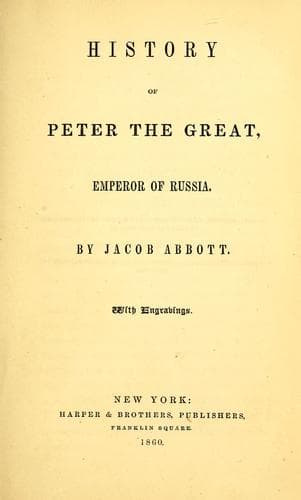
Peter I, Emperor of Russia, 1672-1725; Russia -- History -- Peter I, 1689-1725
The portion of the Swedish army which remained in Russia was soon after
this surrounded by so large a Russian force that the general in command
was forced to capitulate, and all the troops were surrendered as
prisoners of war. Thus, in all, a great number of prisoners, both of
officers and men, fell into Peter's hands. The men were sent to
various parts of the empire, and distributed among the people, in order
that they might settle permanently in the country, and devote
themselves to the trades or occupations to which they had been trained
in their native land. The officers were treated with great kindness
and consideration. Peter often invited them to his table, and
conversed with them in a very free and friendly manner in respect to
the usages and customs which prevailed in their own country, especially
those which related to the military art. Still, they were deprived of
their swords and kept close prisoners.
One day, when some of these officers were dining with Peter in his
tent, and he had been for some time conversing with them about the
organization and discipline of the Swedish army, and had expressed
great admiration for the military talent and skill which they had
displayed in the campaigns which they had fought, he at last poured out
some wine and drank to the health of "his masters in the art of war."
One of the officers who was present asked who they were that his
majesty was pleased to honor with so great a title.
"It is yourselves, gentlemen," replied the Czar; "the Swedish generals.
It is you who have been my best instructors in the art of war."
"Then," replied the officer, "is not your majesty a little ungrateful
to treat the masters to whom you owe so much so severely?"
Peter was so much pleased with the readiness and wit of this reply,
that he ordered the swords of the officers all to be restored to them.
It is said that he even unbuckled his own sword from his side and
presented it to one of the generals.
It ought, perhaps, to be added, however, that the habit of drinking to
excess, which Peter seems to have formed early in life, had before this
time become quite confirmed, and he often became completely intoxicated
at his convivial entertainments, so that it is not improbable that the
sudden generosity of the Czar on this occasion may have been due, in a
considerable degree, to the excitement produced by the brandy which he
had been drinking.
Public-domain text, read in full here on John Shaqi.
Reviews
Reviews
No reviews yet
Be the first to share your thoughts on this work.
Elsewhere in the archive
Join the Discussion
Join the discussion
Sign in to leave a comment or review.
Sign InorCreate an account