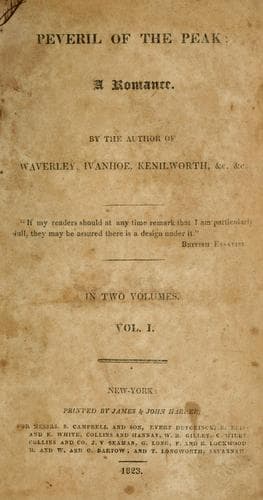
Great Britain -- History -- Charles II, 1660-1685 -- Fiction
He amused himself with walking the deck, and musing on his past and
future prospects, until his attention was forcibly arrested by the
wind, which began to rise in gusts from the north-west, in a manner so
unfavourable to the course they intended to hold, that the master, after
many efforts to beat against it, declared his bark, which was by no
means an excellent sea-boat, was unequal to making Whitehaven; and that
he was compelled to make a fair wind of it, and run for Liverpool. To
this course Peveril did not object. It saved him some land journey, in
case he visited his father’s castle; and the Countess’s commission would
be discharged as effectually the one way as the other.
The vessel was put, accordingly, before the wind, and ran with great
steadiness and velocity. The captain, notwithstanding, pleading some
nautical hazards, chose to lie off, and did not attempt the mouth of
the Mersey until morning, when Peveril had at length the satisfaction of
being landed upon the quay of Liverpool, which even then showed symptoms
of the commercial prosperity that has since been carried to such a
height.
The master, who was well acquainted with the port, pointed out to Julian
a decent place of entertainment, chiefly frequented by seafaring people;
for, although he had been in the town formerly, he did not think it
proper to go anywhere at present where he might have been unnecessarily
recognised. Here he took leave of the seaman, after pressing upon him
with difficulty a small present for his crew. As for his passage, the
captain declined any recompense whatever; and they parted upon the most
civil terms.
The inn to which he was recommended was full of strangers, seamen, and
mercantile people, all intent upon their own affairs, and discussing
them with noise and eagerness, peculiar to the business of a thriving
seaport. But although the general clamour of the public room, in
which the guests mixed with each other, related chiefly to their own
commercial dealings, there was a general theme mingling with them, which
was alike common and interesting to all; so that, amidst disputes about
freight, tonnage, demurrage, and such like, were heard the
emphatic sounds of “Deep, damnable, accursed plot,”--“Bloody Papist
villains,”--“The King in danger--the gallows too good for them,” and so
forth.
Public-domain text, read in full here on John Shaqi.
Reviews
Reviews
No reviews yet
Be the first to share your thoughts on this work.
Elsewhere in the archive
Join the Discussion
Join the discussion
Sign in to leave a comment or review.
Sign InorCreate an account