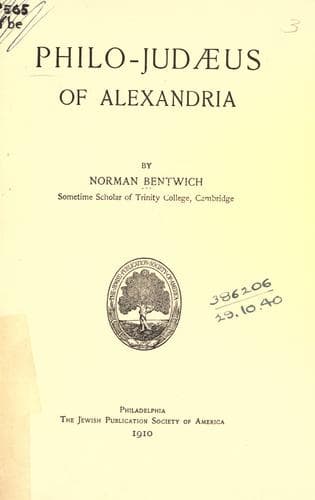
If there is one figure in Jewish tradition with whom Philo challenges
at once comparison and contrast, it is Maimonides, the brightest star
of the Arabic, as he was of the Hellenic, development of the Jewish
religion. Though there is nothing on which to found any direct
influence of the one on the other, the aim, the method, the scope of
their philosophical work are the same, the relation which they hold to
exist between faith and philosophy wellnigh identical. The metaphysics
of the Bible, according to both, is hidden beneath an allegory, and
is meant only for the more learned of the people. To Maimonides the
Bible is not only the standard of all wisdom, but it is "the Divine
anticipation of human discovery." In the words of Hosea, God has
therein "multiplied visions and spoken in similitudes" (xii. 11). The
duty of the Jewish philosopher is to expound these metaphors and
similes; and Maimonides, endeavoring to knit Greek metaphysics closely
with Jewish tradition, propounds a science of allegorical values,
which by exact philological study traces the inner as well as the
outer meaning of the Hebrew words. But differentiated as it is by
greater mastery of the tradition and closer adherence to the Hebrew
text, his method is nearly as artificial and his thought as extraneous
to the text as the method and thought of Philo. The content of their
philosophies is, indeed, strikingly alike, save that the one is a
Platonist, the other an Aristotelian. This involves not so much a
difference of philosophical views as a difference of temper and of
objective. The followers of Plato are mystics, yearning for the love
of God; the followers of Aristotle are rationalists, seeking for the
abstract knowledge of God. Hence in Maimonides there is less soaring
and more argument than in Philo. Everything is deduced, so far as may
be, with exactitude and logical sequence--according to the logic of
the schoolmen--and everything is formalized according to scholastic
principles. But the subjects treated are the same--the nature of God
and His attributes, His relation to the universe and man, the manner
of the creation, and the way of righteousness.
Public-domain text, read in full here on John Shaqi.
Reviews
Reviews
No reviews yet
Be the first to share your thoughts on this work.
Elsewhere in the archive
Join the Discussion
Join the discussion
Sign in to leave a comment or review.
Sign InorCreate an account