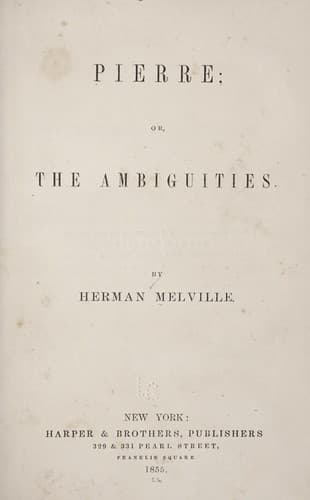
Autobiographical fiction; Domestic fiction; Male authors -- Fiction; Men -- Fiction; Psychological fiction
"Then them lights must burn black; there's no lighted windows in the
street; I knows the city; old maids lives here, and they are all to bed;
rest is warehouses."
"Will you stop the coach, or not?" cried Pierre, now incensed at his
surliness in continuing to drive on.
"I obeys orders: the first house with a light; and 'cording to my
reck'ning--though to be sure, I don't know nothing of the city where I
was born and bred all my life--no, I knows nothing at all about
it--'cording to my reck'ning, the first light in this here street will
be the watch-house of the ward--yes, there it is--all right! cheap
lodgings ye've engaged--nothing to pay, and wictuals in."
To certain temperaments, especially when previously agitated by any deep
feeling, there is perhaps nothing more exasperating, and which sooner
explodes all self-command, than the coarse, jeering insolence of a
porter, cabman, or hack-driver. Fetchers and carriers of the worst city
infamy as many of them are; professionally familiar with the most
abandoned haunts; in the heart of misery, they drive one of the most
mercenary of all the trades of guilt. Day-dozers and sluggards on their
lazy boxes in the sunlight, and felinely wakeful and cat-eyed in the
dark; most habituated to midnight streets, only trod by sneaking
burglars, wantons, and debauchees; often in actual pandering league with
the most abhorrent sinks; so that they are equally solicitous and
suspectful that every customer they encounter in the dark, will prove a
profligate or a knave; this hideous tribe of ogres, and Charon ferry-men
to corruption and death, naturally slide into the most practically
Calvinistical view of humanity, and hold every man at bottom a fit
subject for the coarsest ribaldry and jest; only fine coats and full
pockets can whip such mangy hounds into decency. The least impatience,
any quickness of temper, a sharp remonstrating word from a customer in a
seedy coat, or betraying any other evidence of poverty, however minute
and indirect (for in that pecuniary respect they are the most piercing
and infallible of all the judgers of men), will be almost sure to
provoke, in such cases, their least endurable disdain.
Perhaps it was the unconscious transfer to the stage-driver of some such
ideas as these, which now prompted the highly irritated Pierre to an
act, which, in a more benignant hour, his better reason would have
restrained him from.
He did not see the light to which the driver had referred; and was
heedless, in his sudden wrath, that the coach was now going slower in
approaching it. Ere Isabel could prevent him, he burst open the door,
and leaping to the pavement, sprang ahead of the horses, and violently
reined back the leaders by their heads. The driver seized his
four-in-hand whip, and with a volley of oaths was about striking out its
long, coiling lash at Pierre, when his arm was arrested by a policeman,
who suddenly leaping on the stayed coach, commanded him to keep the
peace.
Public-domain text, read in full here on John Shaqi.
Reviews
Reviews
No reviews yet
Be the first to share your thoughts on this work.
Elsewhere in the archive
Join the Discussion
Join the discussion
Sign in to leave a comment or review.
Sign InorCreate an account