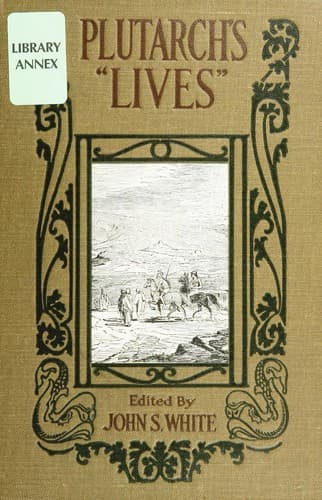
Plutarch: Lives of the noble Grecians and RomansPlutarch
PhilosophyPhilosophy
Plutarch: Lives of the noble Grecians and Romans
Plutarch
Greece -- Biography -- Early works to 1800; Rome -- Biography -- Early works to 1800
In general, it seems that both aimed at the same design and intent,
which was to bring their people to moderation and frugality; but, of
other virtues, the one set his affection most on fortitude, and the
other on justice; unless we will attribute their different ways to the
different habits and temperaments which they had to work upon by their
enactments; for Numa did not out of cowardice or fear affect peace, but
because he would not be guilty of injustice; nor did Lycurgus promote a
spirit of war in his people that they might do injustice to others, but
that they might protect themselves by it.
In bringing the habits they formed in their people to a just and happy
mean, mitigating them where they exceeded, and strengthening them where
they were deficient, both were compelled to make great innovations. The
frame of government which Numa formed was democratic and popular to the
last extreme, goldsmiths and flute-players and shoemakers constituting
his promiscuous, many-colored commonalty. Lycurgus was rigid and
aristocratical, banishing all the base and mechanic arts to the company
of servants and strangers, and allowing the true citizens no implements
but the spear and shield, the trade of war only, and the service of
Mars, and no other knowledge or study but that of obedience to their
commanding officers, and victory over their enemies. Every sort of
money-making was forbid them as freemen; and to make them thoroughly so
and to keep them so through their whole lives, every conceivable concern
with money was handed over, with the cooking and the waiting at table,
to slaves and helots. But Numa made none of these distinctions; he only
suppressed military rapacity, allowing free scope to every other means
of obtaining wealth; nor did he endeavor to do away with inequality in
this respect, but permitted riches to be amassed to any extent, and paid
no attention to the gradual and continual augmentation and influx of
poverty; which it was his business at the outset, whilst there was as
yet no great disparity in the estates of men, and whilst people still
lived much in one manner, to obviate, as Lycurgus did, and take measures
of precaution against the mischiefs of avarice, mischiefs not of small
importance, but the real seed and first beginning of all the great and
extensive evils of after times. The re-division of estates, Lycurgus is
not, it seems to me, to be blamed for making, nor Numa for omitting;
this equality was the basis and foundation of the one commonwealth; but
at Rome, where the lands had been lately divided, there was nothing to
urge any re-division or any disturbance of the first arrangement, which
was probably still in existence.
Public-domain text, read in full here on John Shaqi.
Reviews
Reviews
No reviews yet
Be the first to share your thoughts on this work.
Elsewhere in the archive
Join the Discussion
Join the discussion
Sign in to leave a comment or review.
Sign InorCreate an account