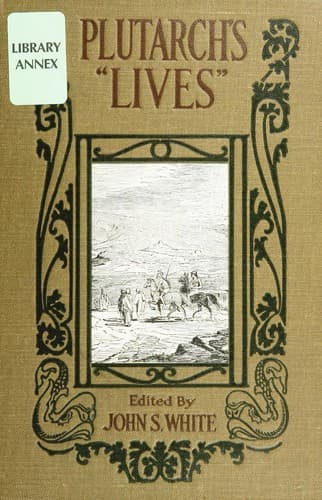
Plutarch: Lives of the noble Grecians and RomansPlutarch
PhilosophyPhilosophy
Plutarch: Lives of the noble Grecians and Romans
Plutarch
Greece -- Biography -- Early works to 1800; Rome -- Biography -- Early works to 1800
After this, public troubles were soon to leave him unmolested; the
people, so to say, discharged their passion in their stroke, and lost
their stings in the wound. But his domestic concerns were in an unhappy
condition many of his friends and acquaintance having died in the plague
time, and those of his family having long since been in disorder and in
a kind of mutiny against him. For the eldest of his lawfully begotten
sons, Xanthippus by name, being naturally prodigal, and marrying a young
and expensive wife, the daughter of Tisander, son of Epilycus, was
highly offended at his father's economy in making him but a scanty
allowance, by little and little at a time. He sent, therefore, to a
friend one day, and borrowed some money of him in his father Pericles's
name, pretending it was by his order. The man coming afterward to
demand the debt, Pericles was so far from yielding to pay it, that he
entered an action against him. Upon which the young man, Xanthippus,
thought himself so ill used and disobliged, that he openly reviled his
father; telling first, by way of ridicule, stories about his
conversations at home, and the discourses he had with the sophists and
scholars that came to his house. As for instance, how one who was a
practicer of the five games of skill, having with a dart or javelin
unawares against his will struck and killed Epitimus the Pharsalian, his
father spent a whole day with Protagoras in a serious dispute, whether
the javelin, or the man that threw it, or the masters of the games who
appointed these sports, were, according to the strictest and best
reason, to be accounted the cause of this mischance. Besides this,
Stesimbrotus tells us that it was Xanthippus who spread abroad among the
people the infamous story concerning his own wife; and in general that
this difference of the young man's with his father, and the breach
betwixt them, continued never to be healed or made up till his death.
For Xanthippus died in the plague time of the sickness. At which time
Pericles also lost his sister, and the greatest part of his relations
and friends, and those who had been most useful and serviceable to him
in managing the affairs of state. However, he did not shrink or give in
upon these occasions, nor betray or lower his high spirit and the
greatness of his mind under all his misfortunes; he was not even so much
as seen to weep or to mourn, or even attend the burial of any of his
friends or relations, till at last he lost his only remaining legitimate
son. Subdued by this blow and yet striving still, as far as he could,
to maintain his principle and to preserve and keep up the greatness of
his soul when he came, however, to perform the ceremony of putting a
garland of flowers upon the head of the corpse, he was vanquished by his
passion at the sight, so that he burst into exclamations, and shed
copious tears, having never done any such thing in all his life before.
Public-domain text, read in full here on John Shaqi.
Reviews
Reviews
No reviews yet
Be the first to share your thoughts on this work.
Elsewhere in the archive
Join the Discussion
Join the discussion
Sign in to leave a comment or review.
Sign InorCreate an account