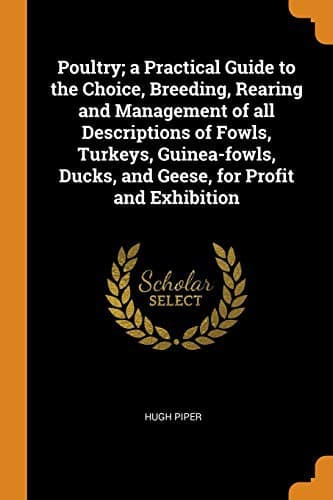
Poultry: A Practical Guide to the Choice, Breeding, Rearing, and Management of all Descriptions of Fowls, Turkeys, Guinea-fowls, Ducks, and Geese, for Profit and Exhibition.Piper, Hugh
Science
Poultry: A Practical Guide to the Choice, Breeding, Rearing, and Management of all Descriptions of Fowls, Turkeys, Guinea-fowls, Ducks, and Geese, for Profit and Exhibition.
Piper, Hugh
Poultry -- Breeding
A hen is often made to hatch ducklings, being considered a better nurse
than a duck, which is apt to take them while too young to the pond,
dragging them under beetling banks in search of food, and generally
leaving half of them in the water unable to get out; and if the fly or
the gnat is on the water, she will stay there till after dark, and lose
part of her brood. Ducks' eggs may be advantageously placed under a
broody exhibition hen. (_See_ page 88.) A turkey is much better than
either, from the large expanse of the wings in covering the broods, and
the greater heat of body; but if the duck is a good sitter, it is best
to let her hatch her own eggs, taking care to keep her and them from the
water till they are strong. The nest should be on the ground, and in a
damp place. Choose the freshest eggs, and place from nine to eleven
under her. Feed her morning and evening while sitting, and place food
and water within her reach. The duck always covers her eggs upon leaving
them, and loose straw should be placed near the house for that purpose.
They are hatched in thirty days. They may generally be left with their
mother upon the nest for her own time. When she moves coop her on the
short grass if fine weather, or under shelter if otherwise, for a week
or ten days, when they may be allowed to swim for half an hour at a
time. When hatched they require constant feeding. A little curd,
bread-crumbs, and meal, mixed with chopped green food, is the best food
when first hatched. Boiled cold oatmeal porridge is the best food for
ducklings for the first ten days; afterwards barley-meal, pollard, and
oats, with plenty of green food. Never give them hard spring water to
drink, but that from a pond. Ducklings are easily reared, soon able to
shift for themselves, and to pick up worms, slugs, and insects, and can
be cooped together in numbers at night if protected from rats. An old
pigsty is an excellent place for a brood of young ducks.
Public-domain text, read in full here on John Shaqi.
Reviews
Reviews
No reviews yet
Be the first to share your thoughts on this work.
Elsewhere in the archive
Join the Discussion
Join the discussion
Sign in to leave a comment or review.
Sign InorCreate an account