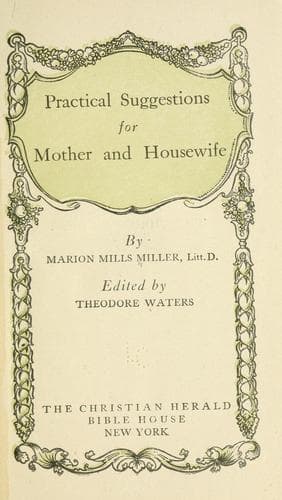
Practical Suggestions for Mother and HousewifeMiller, Marion Mills
Philosophy
Practical Suggestions for Mother and Housewife
Miller, Marion Mills
Home economics
In the percentage of fat present in different kinds and cuts of meat, a
greater difference exists than in the percentage of proteids. The lowest
percentage of fat is 8.1 per cent. in the shank of beef; the highest is
32 per cent. in pork chops. The highest priced cuts, loin and ribs of
beef, contain 20 to 25 per cent. If the fat of the meat is not eaten at
the table, and is not utilized otherwise, a pecuniary loss results. If
butter is the fat used in making crusts for meat pies, and in preparing
the cheaper cuts, there is little economy involved; the fats from other
meat should therefore be saved, as they may be used in place of butter
in such cases, as well as in preparing many other foods. The fat from
sausage or from the soup kettle, or from a pot roast, which is savory
because it has been cooked with vegetables, is particularly acceptable.
Sometimes savory vegetables, onion, or sweet herbs are added to fat when
it is tried out to give it flavor.
Almost any meat bones can be used in soup making, and if the meat is not
all removed from them the soup is better. But some bones, especially the
rib bones, if they have a little meat left on them, can be grilled or
roasted into very palatable dishes. The "sparerib" of southern cooks is
made of the rib bones from a roast of pork, and makes a favorite dish
when well browned. The braised ribs of beef often served in high-class
restaurants are made from the bones cut from rib roasts. In this
connection it may be noted that many of the dishes popular in good
hotels are made of portions of meat such as are frequently thrown away
in private houses, but which with proper cooking and seasoning make
attractive dishes and give most acceptable variety to the menu. An old
recipe for "broiled bones" directs that the bone (beef ribs or sirloin
bones on which the meat is not left too thick in any part) be sprinkled
with salt and pepper (Cayenne), and broiled over a clear fire until
browned. Another example of the use of bones is boiled marrow bone. The
bones are cut in convenient lengths, the ends covered with a little
piece of dough over which a floured cloth is tied, and cooked in boiling
water for two hours. After removing the cloth and dough, the bones are
placed upright on toast and served. Prepared as above, the bones may
also be baked in a deep dish. Marrow is sometimes removed from bones
after cooking, seasoned, and served on toast.
Trimmings from meat may be utilized in various "made dishes," or they
can always be put to good use in the soup kettle. It is surprising how
many economies may be practiced in such ways and also in the table use
of left-over portions of cooked meat if attention is given to the
matter. Many of the following recipes involve the use of such
left-overs. Others will suggest themselves or may be found in all the
usual cookery books.
CHAPTER XIII
RECIPES FOR MEAT DISHES
Public-domain text, read in full here on John Shaqi.
Reviews
Reviews
No reviews yet
Be the first to share your thoughts on this work.
Elsewhere in the archive
Join the Discussion
Join the discussion
Sign in to leave a comment or review.
Sign InorCreate an account