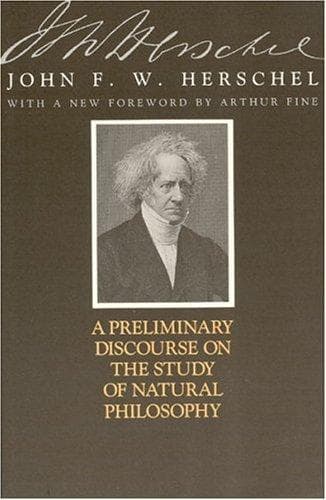
(108.) We shall now endeavour to enumerate and explain in detail the
principal steps by which legitimate and extensive inductions are
arrived at, and the processes by which the mind, in the investigation
of natural laws, purges itself by successive degrees of the
superfluities and incumbrances which hang about particulars, and
obscure the perception of their points of resemblance and connection.
We shall state the helps which may be afforded us, in a work of so
much thought and labour, by a methodical course of proceeding, and
by a careful notice of those means which have at any time been found
successful, with a view to their better understanding and adaptation
to other cases: a species of mental induction of no mean utility and
extent in itself; inasmuch as by pursuing it alone we can attain a more
intimate knowledge than we actually possess of the laws which regulate
our discovery of truth, and of the rules, so far as they extend, to
which invention is reducible. In doing this, we shall commence at the
beginning, with experience itself, considered as the accumulation of
the knowledge of individual objects and facts.
CHAP. IV.
OF THE OBSERVATION OF FACTS AND THE COLLECTION OF INSTANCES.
(109.) Nature offers us two sorts of subjects of contemplation in the
external world,--objects, and their mutual actions. But, after what
has been said on the subject of sensation, the reader will be at no
loss to perceive that we know nothing of the objects themselves which
compose the universe, except through the medium of the impressions they
excite in us, which impressions are the results of certain actions and
processes in which sensible objects and the material parts of ourselves
are directly concerned. Thus, our observation of external nature is
limited to the mutual action of material objects on one another; and
to facts, that is, the associations of phenomena or appearances. We
gain no information by perceiving merely that an object is black; but
if we also perceive it to be fluid, we at least acquire the knowledge
that blackness is not incompatible with fluidity, and have thus made
a step, however trifling, to a knowledge of the more intimate nature
of these two qualities. Whenever, therefore, we would either analyse
a phenomenon into simpler ones, or ascertain what is the course or
law of nature under any proposed general contingency, the first step
is to accumulate a sufficient quantity of well ascertained facts or
recorded instances, bearing on the point in question. Common sense
dictates this, as affording us the means of examining the same subject
in several points of view; and it would also dictate, that the more
different these collected facts are in all other circumstances but that
which forms the subject of enquiry, the better; because they are then
in some sort brought into contrast with one another in their points of
disagreement, and thus tend to render those in which they agree more
prominent and striking.
Public-domain text, read in full here on John Shaqi.
Reviews
Reviews
No reviews yet
Be the first to share your thoughts on this work.
Elsewhere in the archive
Join the Discussion
Join the discussion
Sign in to leave a comment or review.
Sign InorCreate an account