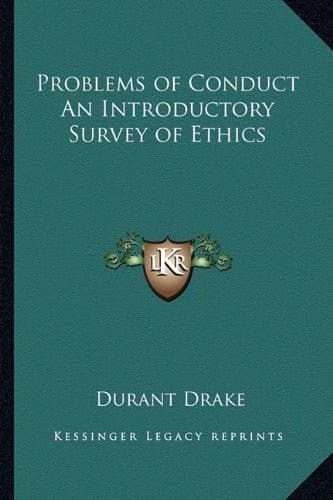
Problems of Conduct: An Introductory Survey of EthicsDrake, Durant
Philosophy
Problems of Conduct: An Introductory Survey of Ethics
Drake, Durant
Ethics
(3) Patriotism must not imply a hatred of, or desire to hurt, other
countries. The sight of one great civilization seeking to injure
another is the shame of humanity. For in the end our interests are
the same; we should not profit by Germany's loss any more than
Connecticut would gain by injury to Vermont. Jingoism, contempt of
other peoples, and purely selfish diplomacy, are sinful outgrowths
of patriotism. We must learn to be fair and good-tempered, to appreciate
the admirable in other nations, to thrill to their ideals, and banish
all suspicious, sneering, or hypercritical attitudes toward them. It
is a pity that the mass of our people get their conceptions of foreign
peoples and rulers so largely through newspaper cartoons and caricatures,
which emphasize and exaggerate their points of difference and inferiority
instead of revealing their power and excellence. It is a stupid
provinciality that conceives a distaste for foreigners because of their
alien manners and to us uncouth language, their different dress and
habits. As a matter of fact, they feel as superior to us as we to them,
and on the whole, perhaps, with as good a right. No one of the nations
but has some noble ideals and achievements to its credit; if we do
not appreciate them, we are thereby proved to be in need of what they
have to give. And underneath these usually superficial differences,
we are all just men and women, with the same loves and hatreds, the
same needs, the same weaknesses and repentances and aspirations. If
we realized our common humanity, we should try to treat them as we
should wish to be treated by them; the Golden Rule, the Christian spirit,
the method of reason and kindness, is as applicable to international
as to inter-personal relations. We should not be too sensitive to the
trivial breaches of manners, the intemperate words and selfish acts
of neighbor-nations, but make allowances and preserve our
good-fellowship, as we do in our personal life. We should beware of
letting our own patriotism lead us into like misconduct. Above all,
we must refuse to let it lead us into the lust of conquest; we must
respect the rights and liberties of other peoples, keep strictly to
our treaty obligations, honor less the patriots who have inflamed
national hatreds and led us to battle against other peoples than those
who have wrought for their country's righteousness and true honor,
and let it be our pride to stand for international comity and good
will. A question that may properly be discussed here is whether it
is permissible to shift patriotism from one country to another. Such
a change of loyalty is, in times of war, called treason, and naturally
evokes the resentment of the deserted side. Even as impartial judges,
we are properly suspicious of such action, as denoting a vacillating
nature, devoid of the true spirit of loyalty, or as indicative of a
selfishness that follows its own personal advantage. And so far as
Public-domain text, read in full here on John Shaqi.
Reviews
Reviews
No reviews yet
Be the first to share your thoughts on this work.
Elsewhere in the archive
Join the Discussion
Join the discussion
Sign in to leave a comment or review.
Sign InorCreate an account