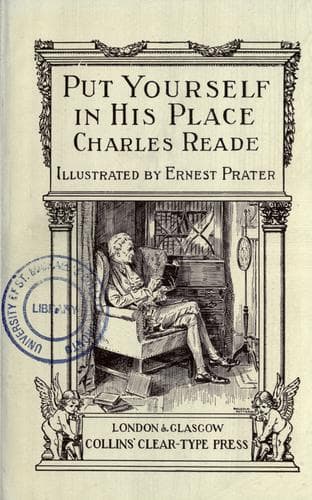
English fiction -- 19th century; Labor unions -- Fiction
“That is true; he was going in to buy some merino sheep, and I to
deposit my rents in Carrington's bank. Next day the bank broke. And the
merino sheep all died within the year. But how many thousand times does
a magpie cross us and nothing come of it? Come, run away, my good girl,
and don't keep them waiting.”
Jael obeyed, with a sigh. She went back to her party--they were gone.
The carriage was just disappearing round a turn in the road. She looked
at it with amazement, and even with anger. It seemed to her a brazen act
of bad faith.
“I wouldn't have believed it of her,” said she, and went back to the
house, mortified and grieved. She did not go to Mr. Raby again; but he
happened to catch sight of her about an hour afterward, and called
to her--“How is this, Jael? Have you let them go alone, because of a
magpie?” And he looked displeased.
“Nay, sir: she gave me the slip, while I went to speak to you for her
good; and I call it a dirty trick, saving your presence. I told her I'd
be back in a moment.”
“Oh, it is not her doing, you may be sure; it is the young gentleman. He
saw a chance to get her alone, and of course he took it. I am not
very well pleased; but I suppose she knows her own mind. It is to be a
marriage, no doubt.” He smoothed it over, but was a little put out,
and stalked away without another word: he had said enough to put Jael's
bosom in a flutter, and open a bright prospect to her heart; Miss
Carden once disposed of in marriage, what might she not hope? She now
reflected, with honest pride, that she had merited Henry's love by rare
unselfishness. She had advised him loyally, had even co-operated with
him as far as any poor girl, with her feelings for him, could do; and
now Mr. Coventry was going to propose marriage to her rival, and she
believed Miss Carden would say “yes,” though she could not in her heart
believe that even Miss Carden did not prefer the other. “Ay, lad,” said
she, “if I am to win thee, I'll be able to say I won thee fair.”
These sweet thoughts and hopes soon removed her temporary anger, and
nothing remained to dash the hopeful joy that warmed that large and
loyal heart this afternoon, except a gentle misgiving that Mr. Coventry
might make Grace a worse husband than she deserved. It was thus she read
the magpie, from three o'clock till six that afternoon.
When a man and a woman do any thing wrong, it is amusing to hear the
judgments of other men and women thereupon. The men all blame the man,
and the women all the woman. That is judgment, is it not?
But in some cases our pitch-farthing judgments must be either heads or
tails; so Mr. Raby, who had cried heads, when a Mrs. Raby would have
cried “woman,” was right; it WAS Mr. Coventry, and not Miss Carden, who
leaned over to George, and whispered, “A sovereign, to drive on without
her! Make some excuse.”
Public-domain text, read in full here on John Shaqi.
Reviews
Reviews
No reviews yet
Be the first to share your thoughts on this work.
Elsewhere in the archive
Join the Discussion
Join the discussion
Sign in to leave a comment or review.
Sign InorCreate an account