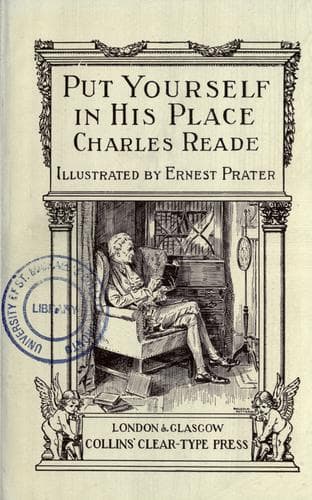
English fiction -- 19th century; Labor unions -- Fiction
After the first joyful burst, she inquired tenderly why he was so pale:
had he been ill?
“No.”
“No trouble nor anxiety, dear?”
“A little, at first, till your sweet letters made me happy. No; I did
not even know that I was pale. Overstudy, I suppose. Inventing is hard
work.”
“What are you inventing?”
“All manner of things. Machine to forge large axes; another to grind
circular saws; a railway clip: but you don't care about such things.”
“I beg your pardon, sir. I care about whatever interests you.”
“Well, these inventions interest me very much. One way or other, they
are roads to fortune; and you know why I desire fortune.”
“Ah, that I do. But excuse me, you value independence more. Oh, I
respect you for it. Only don't make yourself pale, or you will make me
unhappy, and a foe to invention.”
On this Mr. Little made himself red instead of pale, and beamed with
happiness.
They spent a delightful hour together, and, even when they parted, their
eyes lingered on each other.
Soon after this the Cardens gave a dinner-party, and Grace asked if she
might invite Mrs. Little and Mr. Little.
“What, is he presentable?”
“More than that,” said Grace, coloring. “They are both very superior to
most of our Hillsborough friends.”
“Well, but did you not tell me he had quarreled with Mr. Raby?”
“No, not quarreled. Mr. Raby offered to make him his heir: but he
chooses to be independent, and make his own fortune, that's all.”
“Well, if you think our old friend would not take it amiss, invite them
by all means. I remember her a lovely woman.”
So the Littles were invited; and the young ladies admired Mr. Little on
the whole, but sneered at him a little for gazing on Miss Carden, as
if she was a divinity: the secret, which escaped the father, girls
of seventeen detected in a minute, and sat whispering over it in the
drawing-room.
After this invitation, Henry and his mother called, and then Grace
called on Mrs. Little; and this was a great step for Henry, the more so
as the ladies really took to each other.
The course of true love was beginning to run smooth, when it was
disturbed by Mr. Coventry.
That gentleman's hopes had revived in London; Grace Carden had been
very kind and friendly to him, and always in such good spirits, that he
thought absence had cured her of Little, and his turn was come again.
The most experienced men sometimes mistake a woman in this way. The real
fact was that Grace, being happy herself, thanks to a daily letter from
the man she adored, had not the heart to be unkind to another, whose
only fault was loving her, and to whom she feared she had not behaved
very well. However, Mr. Coventry did mistake her. He was detained
in town by business, but he wrote Mr. Carden a charming letter, and
proposed formally for his daughter's hand.
Public-domain text, read in full here on John Shaqi.
Reviews
Reviews
No reviews yet
Be the first to share your thoughts on this work.
Elsewhere in the archive
Join the Discussion
Join the discussion
Sign in to leave a comment or review.
Sign InorCreate an account