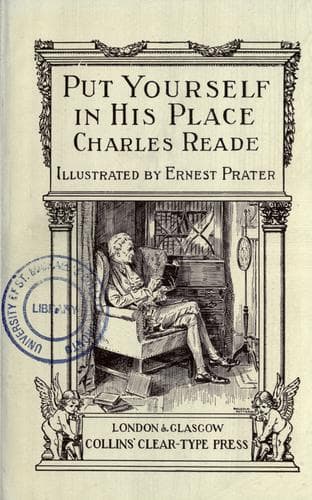
English fiction -- 19th century; Labor unions -- Fiction
Messrs. Bolt and Little were rattened again, and never knew it till
morning. This time it was not the bands, but certain axle-nuts and
screws that vanished. The obnoxious machines came to a standstill, and
Bolt fumed and cursed. However, at ten o'clock, he and the foreman were
invited to the Town hall, and there they found the missing gear, and the
culprit, one of the very workmen employed at high wages on the obnoxious
machines.
Ransome had bored a small hole in the ceiling, by means of which this
room was watched from above; the man was observed, followed, and nabbed.
The property found on him was identified and the magistrate offered the
prisoner a jury, which he declined; then the magistrate dealt with
the case summarily, refused to recognize rattening, called the offense
“petty larceny,” and gave the man six months' prison.
Now as Ransome, for obvious reasons, concealed the means by which this
man had been detected, a conviction so mysterious shook that sense of
security which ratteners had enjoyed for many years, and the trades
began to find that craft had entered the lists with craft.
Unfortunately, those who directed the Saw-grinders' Union thought
the existence of the trade at stake, and this minor defeat merely
exasperated them.
Little received a letter telling him he was acting worse than Brinsley,
who had been shot in the Briggate; and asking him, as a practical man,
which he thought was likely to die first, he or the Union? “You won't
let us live; why should we let you?”
Bolt was threatened in similar style, but he merely handed the missives
to Ransome; he never flinched.
Not so Little. He got nervous; and, in a weak moment, let his mother
worm out of him that he was at war with the trades again.
This added anxiety to her grief, and she became worse every day.
Then Dr. Amboyne interfered, and, after a certain degree of
fencing--which seems inseparable from the practice of medicine--told
Henry plainly he feared the very worst if this went on; Mrs. Little was
on the brink of jaundice. By his advice Henry took her to Aberystwith in
Wales, and, when he had settled her there, went back to his troubles.
To those was now added a desolate home; gone was the noble face, the
maternal eye, the soothing voice, the unfathomable love. He never knew
all her value till now.
One night, as he sat by himself sad and disconsolate, his servant came
to tell him there was a young woman inquiring for Mrs. Little. Henry
went out to her, and it was Jael Dence. He invited her in, and told
her what had happened. Jael saw his distress, and gave him her womanly
sympathy. “And I came to tell her my own trouble,” said she; “fie on
me!”
“Then tell it me, Jael. There, take off your shawl and sit down. They
shall make you a cup of tea.”
Jael complied, with a slight blush; but as to her trouble, she said it
was not worth speaking of in that house.
Public-domain text, read in full here on John Shaqi.
Reviews
Reviews
No reviews yet
Be the first to share your thoughts on this work.
Elsewhere in the archive
Join the Discussion
Join the discussion
Sign in to leave a comment or review.
Sign InorCreate an account