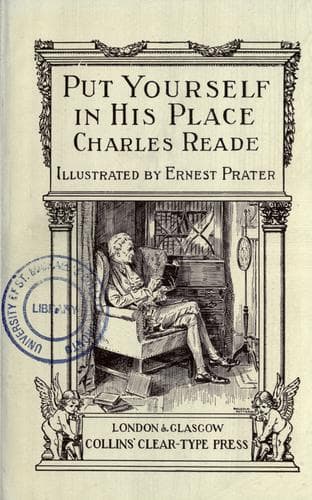
English fiction -- 19th century; Labor unions -- Fiction
Coventry was pale indeed, and his mind all in a whirl as to what he
should say; for Mr. Carden's sagacity terrified him, and the worst of it
was, he felt sure that Grace Carden heard every word.
At last, however, his natural cunning came to his aid, and he made a
very artful speech, directed principally to his unseen hearer.
“Mr. Carden,” said he, “this seems to me very shrewd; but surely it
fails in one respect: you leave the man's character out of the account.
Mr. Little came between me and one I love, and inflicted great misery
on me; but I will try and be just to him. I don't believe he was an
impostor of that kind. He was false in love; he had been reared amongst
workmen, and every body says he loved a working-girl more than he did
your daughter; but as for his cheating you or any other person out of
five thousand pounds, I can't believe it. They all say he was as honest
a man in money matters as ever breathed.”
“You judge him by yourself. Besides, men begin by deceiving women, but
they go on to--Why, Grace, my poor child--Good heavens! have you--?”
Grace was leaning against the open window, ghastly and terrible.
“Yes,” said she haughtily, “I have been guilty of the meanness of
listening, and I suffer for it. It is but one pang more to a broken
heart. Mr. Coventry, you are just, you are generous; and I will try and
reward you for those words. No, papa, no impostor, but a man sore tried,
sore tempted. If he is alive, we shall soon know.”
“How?”
“He will write--TO JAEL DENCE.”
Having uttered this strange speech, she rushed away with a wild cry of
agony, and nobody saw her face again that night.
She did not come down-stairs next day. Mr. Carden went up to her. He
stayed with her an hour, and came down looking much dejected; he asked
Mr. Coventry to take a turn in the garden with him. When they were
alone, he said, gravely, “Mr. Coventry, that unfortunate conversation of
ours has quite upset my poor girl. She tells me now she will not believe
he is dead until months and months have passed without his writing to
Jael Dence.”
“Well, but, sir,” said Coventry, “could you not convince her?”
“How can I, when I am myself convinced he is alive, and will give us a
great deal of trouble yet? for it is clear to me the poor girl loves him
more than she knows. Look here, Coventry, there's no man I so desire for
a son-in-law as yourself; you have shown a patience, a fidelity!--but
as a just man, and a man of honor, I must now advise you to give up
all thoughts of her. You are not doing yourself justice; she will never
marry you while that man is alive and unmarried. I am provoked with her:
she will not leave her room while you are in the house. Shall I tell you
what she said? 'I respect him, I admire him, but I can't bear the sight
of him now.' That is all because I let out last night that I thought
Little was alive. I told her, alive or not, he was dead to her.”
“And what did she say to that?”
Public-domain text, read in full here on John Shaqi.
Reviews
Reviews
No reviews yet
Be the first to share your thoughts on this work.
Elsewhere in the archive
Join the Discussion
Join the discussion
Sign in to leave a comment or review.
Sign InorCreate an account