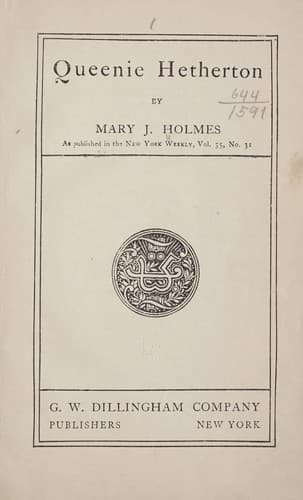
American fiction -- 19th century; Dime novels; Man-woman relationships -- Fiction; Upper class -- Fiction
But Queenie argued differently. March was the month when many tourists
flitted to the South, she said. She would have plenty of time to get
acclimated before summer, and she seemed so anxious and excited, and
determined that a consultation was held between Mr. Beresford, Grandma
Ferguson, and Margery, which resulted in the decision that as soon as
the necessary arrangements could be made, Queenie should leave Merrivale
for Magnolia Park, accompanied by Pierre and Axie, Mrs. Ferguson’s
colored girl, who was trusty and efficient, and delighted with the
prospect of a change from the monotonous life in Merrivale. This giving
up of Axie, who had lived with her so many years, was grandma’s own
proposition, which she strenuously insisted upon, saying, when Queenie
remonstrated, that it would not be for long, as they’d soon get enough
of that heathenish land of niggers and sand, and be back to the North
again.
The last week in February was fixed upon for Queenie’s departure, and
the day before she left, the Hetherton carriage drove through the
village to the cottage, where Mrs. La Rue was living alone. From it
Queenie alighted, and entering unannounced remained there for half an
hour or more. But of that interview nothing was ever known, except this:
When, next day Margery called at the cottage and reported that Queenie
had gone, Mrs. La Rue said, with a quivering lip and trembling voice:
“She kissed me and called me mother.”
CHAPTER XLV.
MAGNOLIA PARK.
Public-domain text, read in full here on John Shaqi.
Reviews
Reviews
No reviews yet
Be the first to share your thoughts on this work.
Elsewhere in the archive
Join the Discussion
Join the discussion
Sign in to leave a comment or review.
Sign InorCreate an account