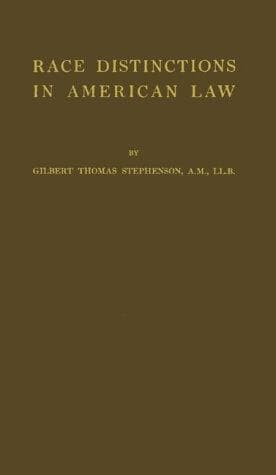
Race Distinctions in American LawStephenson, Gilbert Thomas
History
Race Distinctions in American Law
Stephenson, Gilbert Thomas
African Americans -- Politics and government; Law -- United States -- History; United States -- Race relations
Marriages, slave, certificates of, 70–73;
in Kentucky, 70–72;
in Louisiana, 72;
in Maryland,
72;
legal by statute, 73–74;
in Alabama, 73;
in Arkansas, 73;
in Texas, 73;
in Illinois, 74;
in Ohio, 74;
in Virginia, 74;
in West Virginia, 74;
between slaves and free Negroes, 74;
slave, and Federal legislation, 75;
between Negroes and other non-Caucasian races, 90–91;
between Negroes and Croatan Indians in North Carolina, 90;
effect given by one State to, in other States, 92–95;
marriage a status, 96.
Maryland, “Black Laws” in, 36;
certificates of slave marriages in, 72;
effect of intermarriage in, 84;
separation of races in public schools of, 172–173;
and Negro lawyers, 239;
Negroes as witnesses in, 243;
qualifications for voting in, 328–329;
and Fifteenth Amendment, 317–320.
Massachusetts, civil rights legislation in, 112;
race distinctions in hotels in, 125;
in barber shops in, 129;
in billiard rooms in, 131;
at skating rinks in, 136;
by insurance companies in, 138;
resolution against discrimination by labor unions of, 140;
separation of races in public schools of, before 1857, 167–170, 187;
gave name to “Jim Crow” car, 208;
qualifications for voting in, 328–329.
Mathews, John Mabry, on Fifteenth Amendment, 314–315.
Means of separation of races under “Jim Crow” laws, 224;
on street cars, 229–230.
Metcalf, Secretary, on separation of races in schools of San Francisco,
160.
Methodist Church, race distinctions in, 141.
Michigan, repeal of law against intermarriage in, 90;
race distinctions by insurance companies in, 138, 139;
separation of races in schools of, 187–188;
qualifications for voting in, 328–329.
Militia and Negroes, 144–145.
Milton, Senator, and intermarriage in District of Columbia, 95.
Milwaukee, Wis., race distinctions in restaurants in, 128.
Minnesota, race distinctions in saloons in, 132;
separation of races in schools of, forbidden, 188;
qualifications for voting in, 328–329.
Miscegenation, not a bridge from one race to the other, 19;
and intermarriage, 78–99.
See Intermarriage, Marriages.
Mississippi, limitations upon Negroes in respect to occupations in, 43;
keeping firearms by Negroes without license prohibited in, 44;
selling liquor to Negroes prohibited
in, 44;
contracts for labor by Negroes in, 47;
apprentice law in, 53–55;
vagrancy law in, 59–60;
pauper law in, 61–62;
effect of intermarriage in, 85;
effect given to marriage in other States in, 93;
race distinctions in theatres in, 134;
in cemeteries in, 137;
no discrimination against prisoners on account of race in, 146;
separation of races in public schools of, 173;
early “Jim Crow” law in, 208;
Negroes as witnesses in, 243;
early statute on Negro jury service in, 249;
actual service by Negroes on juries in, 259;
qualifications for voting in, 328–329.
Public-domain text, read in full here on John Shaqi.
Reviews
Reviews
No reviews yet
Be the first to share your thoughts on this work.
Elsewhere in the archive
Join the Discussion
Join the discussion
Sign in to leave a comment or review.
Sign InorCreate an account