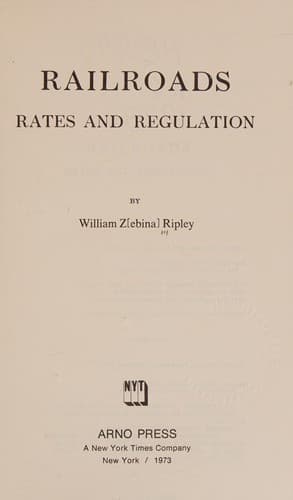
Railroads: Rates and RegulationsRipley, William Zebina
History
Railroads: Rates and Regulations
Ripley, William Zebina
Railroads -- Freight -- Rates -- United States; Railroads and state -- United States
The problem as it affects the manufacturer is akin to that concerning
the jobber. Originally, as a matter of fact, the carload reduction was
essentially a manufacturers' rating, especially for goods in which
the cost of raw material formed a large part of the price of the
finished product. The relations of the carload rate on the former to
the less-than-carload rate on the latter, it is obvious, may readily
become an important element in industrial success. It is plain enough
that carload charges under such circumstances should be substantially
less than those upon small consignments; but that is far from affording
a satisfactory answer to the question as to the proper spread or
difference in charge to be allowed between the two.
Obviously, in any representation as to the reasonableness of the
discount which shall be allowed on carloads, either on the basis
of cost or of traffic principles, the interests of localities are
commercially pitted one against another. The New York or Chicago
jobbing house desiring to sell its goods directly to the retailers
throughout the West, wishes to have a relatively low rate on such
small shipments as the retailers in lesser places alone can afford to
purchase. Participation in this distributing business, however, is
resented by the middlemen located in western centres--Omaha, Denver,
Kansas City, etc.--who all insist that there should be so wide a
difference between carload and less-than-carload rates that they may
ship in their wholesale purchases at a low rate, and thus compete
in their own territory with the manufacturer in the East or the
jobber in New York who desires to sell direct.[361] Comparison of the
classifications in different parts of the country reveals the influence
of these local interests. The railways in Official Classification
territory desire, of course, to build up the manufacturing and jobbing
cities tributary to them. This can best be done by encouraging the
growth of eastern jobbing centres, stimulated by as low rates for
retail as for wholesale shipments. The railways in the western and
southern territory, on the contrary, are obliged to consider the claims
of their constituents, and to correspondingly minimize the advantages
which foreign competitors of their local wholesale dealers enjoy.
Another consideration must also be kept in view, namely, that carload
ratings can only be accorded when business has developed a magnitude
sufficient to permit shipments of that size. The growth of the volume
of business in general, therefore, might be normally expected to
produce an increase in the proportion of carload ratings. Experience,
as we have seen, confirms this view. The normal development, then, is
toward an increase in the number of lower rates quoted for carload
lots. This is retarded only by the influence of the jobbers and
manufacturers in the eastern trade centres, who insist that they shall
be permitted to compete on even terms with provincial middlemen by
Public-domain text, read in full here on John Shaqi.
Reviews
Reviews
No reviews yet
Be the first to share your thoughts on this work.
Elsewhere in the archive
Join the Discussion
Join the discussion
Sign in to leave a comment or review.
Sign InorCreate an account