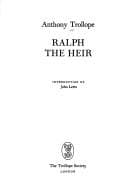
Domestic fiction; England -- Fiction; Fathers and sons -- Fiction; Inheritance and succession -- Fiction
On the next morning they were both out early at Darvell's farm,
surrounded by bricklayers and carpenters, and before the week was
over the work was in progress. Poor Darvell, half elated and half
troubled, knew but little of the cause of this new vehemence.
Something we suppose he did know, for the news was soon spread over
the estate that the Squire had bought out Mr. Ralph, and that this
other Mr. Ralph was now to be Mr. Ralph the heir. That the old butler
should not be told,--the butler who had lived in the house when the
present Squire was a boy,--was out of the question; and though the
communication had been made in confidence, the confidence was not
hermetical. The Squire after all was glad that it should be so. The
thing had to be made known,--and why not after this fashion? Among
the labourers and poor there was no doubt as to the joy felt. That
other Mr. Ralph, who had always been up in town, was unknown to them,
and this Mr. Ralph had ever been popular with them all. With the
tenants the feeling was perhaps more doubtful. "I wish you joy, Mr.
Newton, with all my heart," said Mr. Walker, who was the richest and
the most intelligent among them. "The Squire has worked for you like
a man, and I hope it will come to good."
"I will do my best," said Ralph.
"I am sure you will. There will be a feeling, you know. You mustn't
be angry at that."
"I understand," said Ralph.
"You won't be vexed with me for just saying so." Ralph promised that
he would not be vexed, but he thought very much of what Mr. Walker
had said to him. After all, such a property as Newton does not in
England belong altogether to the owner of it. Those who live upon it,
and are closely concerned in it with reference to all that they have
in the world, have a part property in it. They make it what it is,
and will not make it what it should be, unless in their hearts they
are proud of it. "You know he can't be the real squire," said one old
farmer to Mr. Walker. "They may hugger-mugger it this way and that;
but this Mr. Ralph can't be like t'other young gentleman."
Nevertheless the Squire himself was very happy. These things were
not said to him, and he had been successful. He took an interest in
all things keener than he had felt for years past. One day he was in
the stables with his son, and spoke about the hunting for the coming
season. He had an Irish horse of which he was proud, an old hunter
that had carried him for the last seven years, and of which he had
often declared that under no consideration would he part with it.
"Dear old fellow," he said, putting his hand on the animal's neck,
"you shall work for your bread one other winter, and then you shall
give over for the rest of your life."
"I never saw him look better," said Ralph.
"He's like his master;--not quite so young as he was once. He never
made a mistake yet that I know of."
Public-domain text, read in full here on John Shaqi.
Reviews
Reviews
No reviews yet
Be the first to share your thoughts on this work.
Elsewhere in the archive
Join the Discussion
Join the discussion
Sign in to leave a comment or review.
Sign InorCreate an account