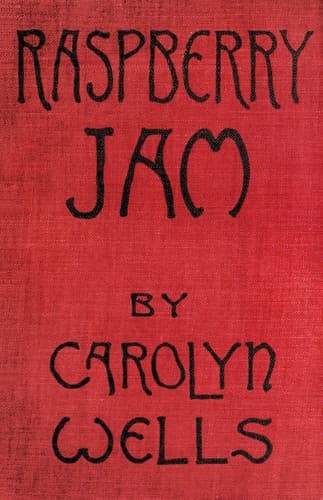
Detective and mystery stories; Stone, Fleming (Fictitious character) -- Fiction
Fibsy nearly shrieked, for at each enumeration of her marvelous
experiences, Miss Ames grasped his arm tighter and emphasized her
statements by pounding on his shoulder.
She seemed unaware of his personal presence--she talked more as if
recounting the matter to herself, but she used him as a general audience
and the boy had to make a desperate effort to preserve his poise.
And then it struck him that the old lady was crazy, or else she really
had an important story to tell. In either case, it was his duty to let
Fleming Stone hear it, at first hand, if possible. But he felt sure that
to call in the rest of the household, or to take the narrator out to
them would--as he expressed it to himself “upset her applecart and
spill the beans!”
Chapter XIV The Five Senses
However he decided quickly, it must be done, so he said, diplomatically,
“This is awful int’restin’, Miss Ames, and I’m just dead sure
and certain Mr. Stone’d think so, too. Let’s go out and get it off
where he c’n hear it. What say?”
The boy had risen and was edging toward the door. Rather than lose her
audience, Aunt Abby followed, and in a moment the pair appeared in the
living-room, where Fleming Stone was still talking to Eunice and Mr.
Elliott.
“Miss Ames, now, she’s got somethin’ worth tellin’,” Fibsy
announced. “This yarn of hers is pure gold and a yard wide, Mr. Stone,
and you oughter hear it, sir.”
“Gladly,” and Stone gave Aunt Abby a welcoming smile.
Nothing loath to achieve the center of the stage, the old lady seated
herself in her favorite arm-chair, and began:
“It was almost morning,” she said, “a faint dawn began to make
objects about the room visible, when I opened my eyes and saw a dim,
gliding figure--”
Eunice gave an angry exclamation, and rising quickly from her chair,
walked into her own room, and closed the door with a slam that left no
doubt as to her state of mind.
“Let her alone,” advised Elliott; “she’s better off in there.
What is this story, Aunt Abby? I’ve never heard it in full.”
“No; Eunice never would let me tell it. But it will solve all mystery
of Sanford’s death.”
“Then it is indeed important,” and Stone looked at the speaker
intently.
“Yes, Mr. Stone, it will prove beyond all doubt that Mr. Embury was a
suicide.”
“Go on, then,” said Elliott, briefly.
“I will. In the half light, I saw this figure I just mentioned. It
wasn’t discernible clearly--it was merely a moving shadow--a vague
shape. It came toward me--”
“From which direction?” asked Stone, with decided interest.
“From Eunice’s room--that is, it had, of course, come from Mr.
Embury’s room, through Eunice’s room, and so on into my room. For it
was Sanford Embury’s spirit--get that firmly in your minds!”
The old lady spoke with asperity, for she was afraid of contradiction,
and resented their quite apparent scepticism.
“Go on, please,” urged Stone.
“Well, the spirit came nearer my bed, and paused and looked down on me
where I lay.”
“Did you see his face?” asked Elliott.
Public-domain text, read in full here on John Shaqi.
Reviews
Reviews
No reviews yet
Be the first to share your thoughts on this work.
Elsewhere in the archive
Join the Discussion
Join the discussion
Sign in to leave a comment or review.
Sign InorCreate an account