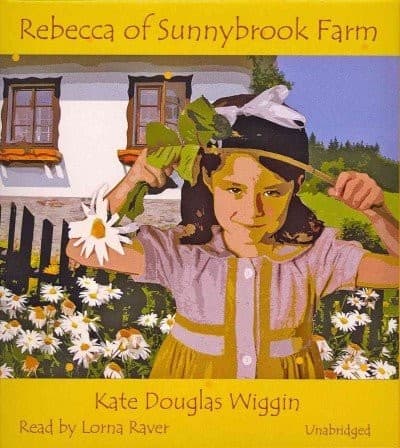
Rebecca of Sunnybrook FarmWiggin, Kate Douglas Smith
General
Rebecca of Sunnybrook Farm
Wiggin, Kate Douglas Smith
Aunts -- Juvenile fiction; Girls -- Juvenile fiction; New England -- Juvenile fiction
"I can remember mine well enough, and a particularly unpleasant one it
was," said the stranger.
"So was mine," sighed Rebecca. "What was your worst trouble?"
"Lack of food and clothes principally."
"Oh!" exclaimed Rebecca sympathetically,--"mine was no shoes and too
many babies and not enough books. But you're all right and happy now,
aren't you?" she asked doubtfully, for though he looked handsome,
well-fed, and prosperous, any child could see that his eyes were tired
and his mouth was sad when he was not speaking.
"I'm doing pretty well, thank you," said the man, with a delightful
smile. "Now tell me, how much soap ought I to buy to-day?"
"How much has your aunt on hand now?" suggested the very modest and
inexperienced agent; "and how much would she need?"
"Oh, I don't know about that; soap keeps, doesn't it?"
"I'm not certain," said Rebecca conscientiously, "but I'll look in the
circular--it's sure to tell;" and she drew the document from her pocket.
"What are you going to do with the magnificent profits you get from
this business?"
"We are not selling for our own benefit," said Rebecca confidentially.
"My friend who is holding the horse at the gate is the daughter of a
very rich blacksmith, and doesn't need any money. I am poor, but I live
with my aunts in a brick house, and of course they wouldn't like me to
be a peddler. We are trying to get a premium for some friends of ours."
Rebecca had never thought of alluding to the circumstances with her
previous customers, but unexpectedly she found herself describing Mr.
Simpson, Mrs. Simpson, and the Simpson family; their poverty, their
joyless life, and their abject need of a banquet lamp to brighten their
existence.
"You needn't argue that point," laughed the man, as he stood up to get
a glimpse of the "rich blacksmith's daughter" at the gate. "I can see
that they ought to have it if they want it, and especially if you want
them to have it. I've known what it was myself to do without a banquet
lamp. Now give me the circular, and let's do some figuring. How much do
the Simpsons lack at this moment?"
"If they sell two hundred more cakes this month and next, they can have
the lamp by Christmas," Rebecca answered, "and they can get a shade by
summer time; but I'm afraid I can't help very much after to-day,
because my aunt Miranda may not like to have me."
"I see. Well, that's all right. I'll take three hundred cakes, and that
will give them shade and all."
Rebecca had been seated on a stool very near to the edge of the porch,
and at this remark she made a sudden movement, tipped over, and
disappeared into a clump of lilac bushes. It was a very short distance,
fortunately, and the amused capitalist picked her up, set her on her
feet, and brushed her off. "You should never seem surprised when you
have taken a large order," said he; "you ought to have replied 'Can't
you make it three hundred and fifty?' instead of capsizing in that
unbusinesslike way."
Public-domain text, read in full here on John Shaqi.
Reviews
Reviews
No reviews yet
Be the first to share your thoughts on this work.
Elsewhere in the archive
Join the Discussion
Join the discussion
Sign in to leave a comment or review.
Sign InorCreate an account