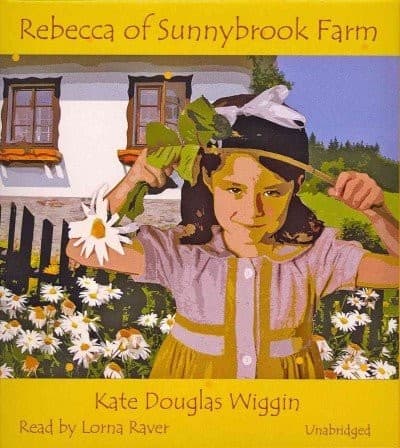
Rebecca of Sunnybrook FarmWiggin, Kate Douglas Smith
General
Rebecca of Sunnybrook Farm
Wiggin, Kate Douglas Smith
Aunts -- Juvenile fiction; Girls -- Juvenile fiction; New England -- Juvenile fiction
The talk that ensued was much the usual sort of thing. Mr. Burch made
impassioned appeals for the spreading of the gospel, and added his
entreaties that all who were prevented from visiting in person the
peoples who sat in darkness should contribute liberally to the support
of others who could. But he did more than this. He was a pleasant,
earnest speaker, and he interwove his discourse with stories of life in
a foreign land,--of the manners, the customs, the speech, the point of
view; even giving glimpses of the daily round, the common task, of his
own household, the work of his devoted helpmate and their little group
of children, all born under Syrian skies.
Rebecca sat entranced, having been given the key of another world.
Riverboro had faded; the Sunday-school room, with Mrs. Robinson's red
plaid shawl, and Deacon Milliken's wig, on crooked, the bare benches
and torn hymn-books, the hanging texts and maps, were no longer
visible, and she saw blue skies and burning stars, white turbans and
gay colors; Mr. Burch had not said so, but perhaps there were mosques
and temples and minarets and date-palms. What stories they must know,
those children born under Syrian skies! Then she was called upon to
play "Jesus shall reign where'er the sun."
The contribution box was passed and Mr. Burch prayed. As he opened his
eyes and gave out the last hymn he looked at the handful of people, at
the scattered pennies and dimes in the contribution box, and reflected
that his mission was not only to gather funds for the building of his
church, but to keep alive, in all these remote and lonely
neighborhoods, that love for the cause which was its only hope in the
years to come.
"If any of the sisters will provide entertainment," he said, "Mrs.
Burch and I will remain among you to-night and to-morrow. In that event
we could hold a parlor meeting. My wife and one of my children would
wear the native costume, we would display some specimens of Syrian
handiwork, and give an account of our educational methods with the
children. These informal parlor meetings, admitting of questions or
conversation, are often the means of interesting those not commonly
found at church services so I repeat, if any member of the congregation
desires it and offers her hospitality, we will gladly stay and tell you
more of the Lord's work."
Public-domain text, read in full here on John Shaqi.
Reviews
Reviews
No reviews yet
Be the first to share your thoughts on this work.
Elsewhere in the archive
Join the Discussion
Join the discussion
Sign in to leave a comment or review.
Sign InorCreate an account