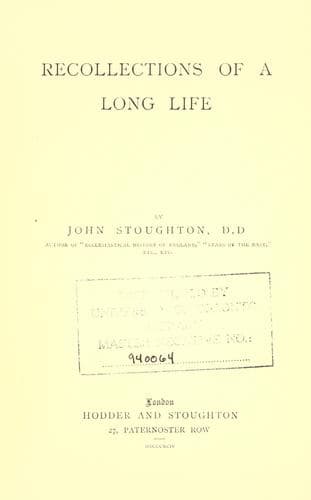
Clergy -- England -- Biography; Stoughton, John, 1807-1897
We were now approaching the border of France, and I had memories revived
of a first dip into Spain, years before. Though the land be still the
same and the skies the same, different feelings arise from departure out
of a country, compared with one’s entrance into it. We reached a new and
very comfortable hotel at San Sebastian, and there I revived
recollections of curiosity and interest, felt years before, when I first
crossed the border and became acquainted with the costumes, the manners
and customs of Spanish life.
CHAPTER XV
1885
THIS year I paid my third and last visit to Rome. A comparison of the
city and neighbourhood as they were during my first visit with what now
appeared, was very striking. Formerly it retained much of the appearance
it had in the previous century. There were narrow streets, bad
pavements, old-fashioned houses; monks and friars of different orders,
white, black, grey, thronging thoroughfares; cardinals’ coaches with
liveried servants, in gay coats and cocked hats; the Pope, driving down
the Corso, whilst the whole population watched him with reverence on
bended knees: now these old sights had vanished; comparatively few
ecclesiastics could be recognised by their costumes; only companies of
boys, in red or blue collegiate garb, attracted attention by contrast
with other people. At Easter in the olden time the ceremonies at St.
Peter’s were gorgeous, the illumination of the dome brilliant, the
fireworks in the Piazza del Popolo unrivalled: now Mass on Easter Sunday
was far from imposing, there was no feet washing, no dinner to poor
pilgrims, no _Miserere_ in the Sistine chapel, no blaze of candles in the
Pauline. The Forum had formerly lines of trees, groups of cattle,
peasants in rural costume; now marble sculptures had been brought to
light. The neighbourhood of St. John Lateran had been waste and void;
now it was covered with modern houses. What a change in the Fontana,
outside Rome, the traditional site of St. Paul’s martyrdom. The
monastery, when I had seen it before was desolate, now it was surrounded
by abundant vegetation; the culture of the eucalyptus plant being the
secret of this transformation.
Hare laments, in the following strain, changes which had occurred in the
city and were to be regretted:—
Public-domain text, read in full here on John Shaqi.
Reviews
Reviews
No reviews yet
Be the first to share your thoughts on this work.
Elsewhere in the archive
Join the Discussion
Join the discussion
Sign in to leave a comment or review.
Sign InorCreate an account