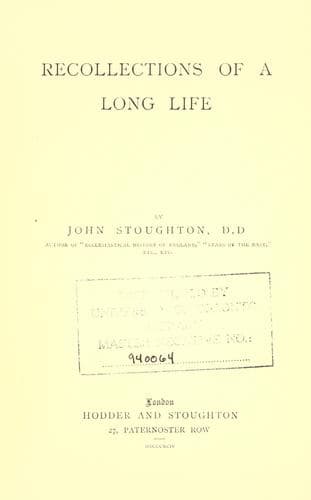
Clergy -- England -- Biography; Stoughton, John, 1807-1897
I. To begin with the Church of England. I remember hearing a sermon by
the late Bishop of Manchester, at the reopening of Chester Cathedral,
when, in no measured terms, he dwelt upon ecclesiastical abuses, as they
existed during the last century, and the earliest part of the present.
He exposed the nepotism of bishops, the worldliness of clergymen, and the
indifference of Church-people to religion in general. About the same
time another prelate privately told me that things in his diocese, when
he was first consecrated, had reached such a point as made it wonderful
how the Establishment had survived. He complained of the limited power
diocesans had at command, to repress existing evils, and gave an
instance, how in his own case he had spent a large sum without any effect
for the removal of a clergyman who had dishonoured his profession. About
the facts charged against the delinquent there could be no doubt, but
proceedings failed through technical objections. I remember when I was a
youth there were scandals in the diocese of Norwich, publicly known, yet
legally unassailable. Plurality and non-residence were notorious.
Preaching was neglected to a shameful degree; in one case fifteen
churches were served by three incumbents. Livings had to be sequestered
through clerical insolvency or scandalous misconduct. Bishop Stanley
wrought a great reformation in these respects, much to the dismay of
delinquents, much to the satisfaction of parishioners. I remember him
perfectly well. Of slight figure, with white hair, he tripped along the
streets of Norwich on a Sunday, to one church after another without
giving beforehand notice of his movements, but surprising rector or
curate at the close of the service by rising to pronounce the
benediction. He was as unremitting and efficient in his clerical
position, as he had before been in his naval duties. The magistrates’
seat prepared Ambrose for his episcopate at Milan: the deck of a ship
prepared Edward Stanley to rule the diocese of Norwich.
The typical High Church clergyman of my early days was a person
perfunctorily discharging his duties, living on civil terms with his
parishioners, known in the parish by clerical costume, reading prayers in
a surplice, and preaching in a black gown, visiting the best society in
the neighbourhood, kind to the poor, and looking upon Dissenters as a
rather suspicious class.
Public-domain text, read in full here on John Shaqi.
Reviews
Reviews
No reviews yet
Be the first to share your thoughts on this work.
Elsewhere in the archive
Join the Discussion
Join the discussion
Sign in to leave a comment or review.
Sign InorCreate an account