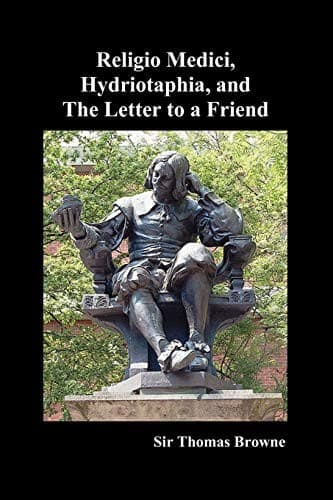
Religio Medici, Hydriotaphia, and the Letter to a FriendBrowne, Thomas, Sir
Religion
Religio Medici, Hydriotaphia, and the Letter to a Friend
Browne, Thomas, Sir
Christian ethics; Christian life; Essays; Funeral rites and ceremonies; Medical ethics; Medicine -- History; Religion and medicine
but commend, in my calmer judgment, those ingenuous intentions that
desire to sleep by the urns of their fathers, and strive to go the
neatest way unto corruption. I do not envy the temper[55] of crows and
daws, nor the numerous and weary days of our fathers before the flood.
If there be any truth in astrology, I may outlive a jubilee;[56] as
yet I have not seen one revolution of Saturn,[57] nor hath my pulse
beat thirty years, and yet, excepting one,[58] have seen the ashes of,
and left under ground, all the kings of Europe; have been contemporary
to three emperors, four grand signiors, and as many popes: methinks I
have outlived myself, and begin to be weary of the sun; I have shaken
hands with delight in my warm blood and canicular days; I perceive
I do anticipate the vices of age; the world to me is but a dream or
mock-show, and we all therein but pantaloons and anticks, to my severer
contemplations.
_Sect._ 42.--It is not, I confess, an unlawful prayer to desire to
surpass the days of our Saviour, or wish to outlive that age wherein
he thought fittest to die; yet, if (as divinity affirms) there shall
be no grey hairs in heaven, but all shall rise in the perfect state
of men, we do but outlive those perfections in this world, to be
recalled unto them by a greater miracle in the next, and run on here
but to be retrograde hereafter. Were there any hopes to outlive vice,
or a point to be superannuated from sin, it were worthy our knees to
implore the days of Methuselah. But age doth not rectify, but incurvate
our natures, turning bad dispositions into worser habits, and (like
diseases) brings on incurable vices; for every day, as we grow weaker
in age, we grow stronger in sin, and the number of our days doth but
make our sins innumerable. The same vice, committed at sixteen, is not
the same, though it agrees in all other circumstances, as at forty; but
swells and doubles from the circumstance of our ages, wherein, besides
the constant and inexcusable habit of transgressing, the maturity of
our judgment cuts off pretence unto excuse or pardon. Every sin, the
oftener it is committed, the more it acquireth in the quality of evil;
as it succeeds in time, so it proceeds in degrees of badness; for as
they proceed they ever multiply, and, like figures in arithmetick,
the last stands for more than all that went before it. And, though I
think no man can live well once, but he that could live twice, yet, for
my own part, I would not live over my hours past, or begin again the
thread of my days; not upon Cicero’s ground,[L] because I have lived
them well, but for fear I should live them worse. I find my growing
judgment daily instruct me how to be better, but my untamed affections
and confirmed vitiosity make me daily do worse. I find in my confirmed
age the same sins I discovered in my youth; I committed many then
because I was a child; and, because I commit them still, I am yet an
infant. Therefore I perceive a man may be twice a child, before the
Public-domain text, read in full here on John Shaqi.
Reviews
Reviews
No reviews yet
Be the first to share your thoughts on this work.
Join the Discussion
Join the discussion
Sign in to leave a comment or review.
Sign InorCreate an account