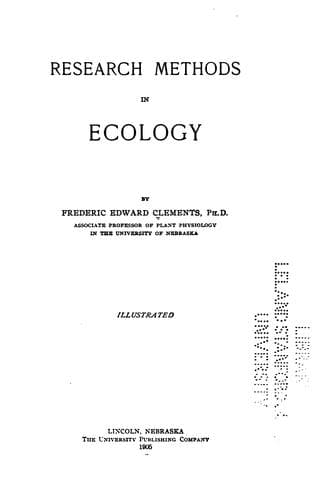
Research methods in ecologyClements, Frederic E. (Frederic Edward)
Science
Research methods in ecology
Clements, Frederic E. (Frederic Edward)
Plant ecology; Plant ecology -- Methodology
=117. The chemical nature of soils.= The effect of alkaline and acid
substances in the soil upon water-content and the activities of the
plant is far from being well understood. It is generally recognized that
salts and acids tend to inhibit the absorptive power of the root-hairs.
In the case of saline soils, this inhibitive effect seems to be
established, but the action of acids in bogs and swamps is still an open
question. It is probable that the influence of organic acid has been
overestimated, and that the curious anomaly of a structural xerophyte in
a swamp is to be explained by the stability of the ancestral type and by
the law of extremes. Apart from the effect which excessive amounts of
acids and salts may have in reducing the chresard, the chemical
character of the soil is powerless to produce structural modification in
the plant. Since Thurmann’s researches there has been no real support of
the contention that the chemical properties of the soil, not its
physical nature, are the decisive factors in the distribution and
adaptation of plants. It is not sufficient that the vegetation of a
silicious soil differs from that of a calcareous one. A soil can modify
the plants upon it only though its water-content, or the solutes it
contains. Hence, the chemical composition of the original rock is
immaterial, except in so far as it modifies these two factors. Humus,
moreover, while an important factor in growth, has no formative
influence beyond that which it exerts through water-content.
PHYSIOGRAPHY
Public-domain text, read in full here on John Shaqi.
Reviews
Reviews
No reviews yet
Be the first to share your thoughts on this work.
Elsewhere in the archive
Join the Discussion
Join the discussion
Sign in to leave a comment or review.
Sign InorCreate an account