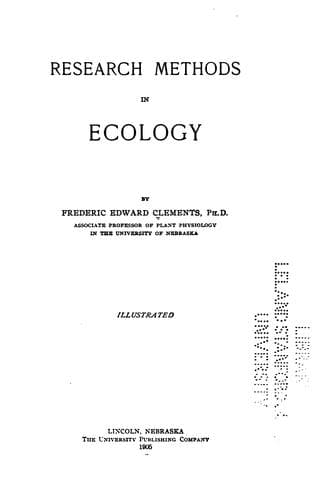
Research methods in ecologyClements, Frederic E. (Frederic Edward)
Science
Research methods in ecology
Clements, Frederic E. (Frederic Edward)
Plant ecology; Plant ecology -- Methodology
Response is the reaction of the plant to a stimulus; it begins with the
impact of an efficient factor, and ends only with the consequent final
readjustment. The immediate reaction is always functional. The nature
and intensity of the stimulus determine whether this functional response
is followed by a corresponding change in structure. The consideration of
this theme consequently gains in clearness if a functional and a
structural response be distinguished. The chief value of this
distinction lies in the fact that many reactions are functional alone;
it serves also to emphasize the absolute interdependence of structure
and function, and the imperative need of considering both in connection
with the common stimulus. For these reasons, the logical treatment is to
connect each stimulus with its proper functional change, and, through
this, with the corresponding modification of structure. For the sake of
convenience, the term _adjustment_ is used to denote response in
function, and _adaptation_, to indicate the response in structure.
=147. Adjustment and adaptation.= The adjustment of a plant to the
stimuli of its habitat is a constant process. It is the daily task, seen
in nutrition and growth. So long as these take place under stimulation
by factors which fall within the normal variation of the habitat, the
problems belong to what has long been called physiology. When the
stimuli become unusual in degree or in kind, by a change of habitat or a
modification in it, adjustment is of much greater moment and is recorded
in the plant’s structure. These structural records are the foundation of
proper ecological study. Since they are the direct result of adjustment,
however, this affords further evidence that a division of the field into
ecology and physiology is illogical and superficial. Slight or
periodical adjustment may concern function alone; it may be expressed in
the movement of parts or organs, such as the closing of stomata or
changes in the position of leaves, in growth, or in modifications of
structure. This expression is fundamentally affected by the nature of
the factor and is in direct relation to the intensity of the latter.
Adaptation comprises all structural changes resulting from adjustment.
It includes both growth and modification. The latter is merely growth in
response to unusual stimuli, but this fact is the real clue to all
evolution. Growth is periodic, and in a sense quantitative; it results
from the normal continuous adjustment of the plant to the stimuli of its
proper habitat. In contrast, modification is relatively permanent and
qualitative; it is the response to stimuli unusual in kind or intensity.
A definite knowledge of the processes of growth is indispensable to an
understanding of modification. In the fundamental task of connecting
plant and habitat, it is the modification of the plant, and not its
growth, which records the significant responses to stimuli. For this
Public-domain text, read in full here on John Shaqi.
Reviews
Reviews
No reviews yet
Be the first to share your thoughts on this work.
Elsewhere in the archive
Join the Discussion
Join the discussion
Sign in to leave a comment or review.
Sign InorCreate an account