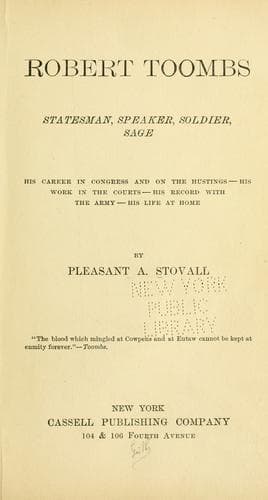
Robert Toombs: Statesman, Speaker, Soldier, SageStovall, Pleasant A.
History
Robert Toombs: Statesman, Speaker, Soldier, Sage
Stovall, Pleasant A.
Toombs, Robert Augustus, 1810-1885
Toombs, Gen. Robert, ancestry, 1-4;
birth, 4;
filial affection, 4;
boyhood and education, 4-12;
horsemanship, 4-6;
historical learning, 6;
play upon his name, 6;
generosity, 10, 124, 283, 284, 357;
joins Methodist Church, 11, 373;
trustee of State University, 11;
college legends of, 12;
receives degree, 13;
admitted to the bar, 13;
marriage, 14;
legal career, 13-28;
legal ethics, 18, 19, 23;
oratorical powers, 18, 21, 23-25, 27, 28;
financial ability, 23, 59, 152, 220, 310, 362;
morality, 23, 24;
Reese's opinion of, 24;
justice of, 26, 27;
failing powers, 27;
brilliant plea of, 28;
entrance into politics, 30;
elected to General Assembly, 30;
popularity in Wilkes County, 32;
chairman of Judiciary Committee in General Assembly, 33, 38;
action on Gov. McDonald's relief measures, 34-37;
financial policy, 35-39;
defends Berrien, 39;
support of railroad enterprise, 40;
compared with A. H. Stephens, 43;
friendship of the two, 43;
first participation in national politics, 45;
contentions with McDuffie, 45-51;
charged with being an Abolitionist, 46;
compared to Mirabeau, 46;
delegate to Clay convention of 1844, 46;
opposes acquisition of Texas, 53;
sent to Congress, 55, 56, 63, 93;
position on Oregon question, 57;
leads in campaign of 1848 in Georgia, 60;
reported rupture between Pres. Taylor and, 64, 65;
leads Southern members from Whig caucus, 69;
personal appearance, 72, 74, 89, 90, 130;
domestic character, 82, 353-363;
address to people of Georgia, 83-85;
sent to convention at Milledgeville, 86;
renominated for Congress, 87;
prominence in campaign of 1850, 87, 88;
position on the Union question, 88;
a journalist's description of, 91;
elected U. S. Senator, 94, 158;
charged with fomenting secession, 94;
letters to his wife, 95, 123-125, 158, 239, 242, 277, 278, 310-313,
354, 355, 359, 360;
feeling toward the North, 98;
friendship for Webster, 101;
becomes a Democrat, 105;
independence of, 106;
enters U. S. Senate, 107;
frequently misquoted, 119;
horror of civil war, 120;
death of his daughters, 123, 310, 312;
European trip, 123, 125-128;
liberality in matters of conscience, 125;
physical strength, 125, 127;
international reputation, 126;
knowledge of human nature, 127;
treatment of slaves, 138, 139;
accused of participation in assault on Sumner, 142, 143;
debate with Hill, 144-152;
accused of being a turncoat and disunionist, 151;
address to Northern Democrats, 176, 177;
letter to Macon committee, 179, 180;
advice on Charleston convention matters, 180, 181;
fears for the Constitution, 180, 182;
rupture with Douglas, 181;
delegate to Democratic State convention, 183;
Vincent's characterization of, 184, 185;
charges of desertion of Douglas, 186;
Presidential ambitions, 186, 187;
Public-domain text, read in full here on John Shaqi.
Reviews
Reviews
No reviews yet
Be the first to share your thoughts on this work.
Elsewhere in the archive
Join the Discussion
Join the discussion
Sign in to leave a comment or review.
Sign InorCreate an account