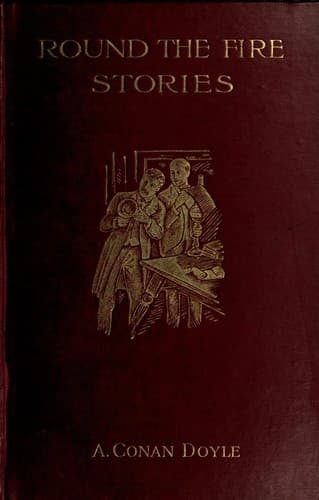
English fiction; Horror tales, English; Short stories, English
And so the matter stood, and has continued to stand up to the present
year of 1898. Incredible as it may seem, nothing has transpired during
these eight years which has shed the least light upon the extraordinary
disappearance of the special train which contained Monsieur Caratal and
his companion. Careful inquiries into the antecedents of the two
travellers have only established the fact that Monsieur Caratal was well
known as a financier and political agent in Central America, and that
during his voyage to Europe he had betrayed extraordinary anxiety to
reach Paris. His companion, whose name was entered upon the passenger
lists as Eduardo Gomez, was a man whose record was a violent one, and
whose reputation was that of a bravo and a bully. There was evidence to
show, however, that he was honestly devoted to the interests of Monsieur
Caratal, and that the latter, being a man of puny physique, employed the
other as a guard and protector. It may be added that no information came
from Paris as to what the objects of Monsieur Caratal’s hurried journey
may have been. This comprises all the facts of the case up to the
publication in the Marseilles papers of the recent confession of Herbert
de Lernac, now under sentence of death for the murder of a merchant
named Bonvalot. This statement may be literally translated as follows:—
“It is not out of mere pride or boasting that I give this information,
for, if that were my object, I could tell a dozen actions of mine which
are quite as splendid; but I do it in order that certain gentlemen in
Paris may understand that I, who am able here to tell about the fate of
Monsieur Caratal, can also tell in whose interest and at whose request
the deed was done, unless the reprieve which I am awaiting comes to me
very quickly. Take warning, messieurs, before it is too late! You know
Herbert de Lernac, and you are aware that his deeds are as ready as his
words. Hasten then, or you are lost!
“At present I shall mention no names—if you only heard the names, what
would you not think!—but I shall merely tell you how cleverly I did it.
I was true to my employers then, and no doubt they will be true to me
now. I hope so, and until I am convinced that they have betrayed me,
these names, which would convulse Europe, shall not be divulged. But on
that day ... well, I say no more!
Public-domain text, read in full here on John Shaqi.
Reviews
Reviews
No reviews yet
Be the first to share your thoughts on this work.
Elsewhere in the archive
Join the Discussion
Join the discussion
Sign in to leave a comment or review.
Sign InorCreate an account