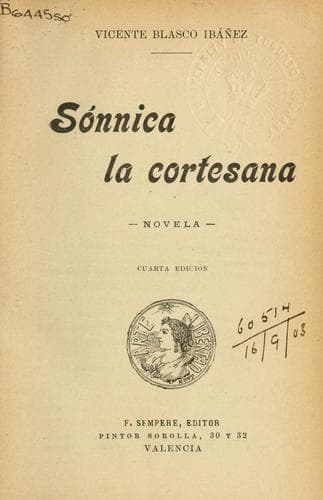
Sagunto (Spain) -- History -- Siege, 219-218 B.C. -- Fiction
The branches of the cherry tree shook, and the shepherdess descended,
agile as a squirrel, her limbs bare, her skirt gathered up and filled
with cherries. She and her lover devoured them amid laughter, their lips
ruddy with the crimson fruit-juice, and they decorated each other's hair
or hung yokes of cherries over their ears, forming picturesque
ruby-colored earrings.
Actæon smiled at the strong, handsome young folks who ever sought each
other's company and frolicked as if they were in the heart of the
desert, giving no heed to the danger threatening the city.
"But what about your art?" he asked.
Erotion and Rhanto laughed at the recollection.
"I smashed the figure to pieces," said the boy. "I broke the clay into
fragments, and I have decided to touch no other than that in the
pottery--when I make up my mind to return there."
He flung his arms around the shepherdess and rested his head upon her
shoulder, rubbing his cheek against her neck with an almost feline
caress.
"Why should I work?" he added. "I spent many days kneeling before that
accursed clay, struggling to make it take on the form of her body; but
it is useless. Clay is clay, and it cannot become living substance. When
the soft flesh of my Rhanto is within reach of my hand, it is folly to
grow desperate trying to mold earth into a semblance of her life. I wish
to dream no more, Athenian. I will be content with what I have."
With sublime indifference he caressed his playmate in Actæon's presence.
"One day," continued the boy, "I saw clearly, and I understood the
truth. Rhanto stood before me. Blinded by ambition I had seen in her
only the model, but that day I beheld the woman. Why seek glory when I
had love before me! Even though I should mould a great statue, what
should I gain? That people should say, after I am dead, 'Erotion the
Saguntine made this.' I should not hear it--after having spent my life
working and suffering. No; let us live and love. That day I kicked the
statue to pieces, and I embraced Rhanto with an enthusiasm of joy.
Loving each other is better than wasting time over clay puppets. Is not
that so, Rhanto?"
They kissed each other again, heedless of the presence of the Greek.
Actæon observed a transformation in the pair, both in the frank devotion
of the boy, and in the glow in the eyes of the shepherdess. The ardor of
love seemed to have made him more manly, and to have given her a suave
and tender grace, a sweet abandon which she had lacked before.
Public-domain text, read in full here on John Shaqi.
Reviews
Reviews
No reviews yet
Be the first to share your thoughts on this work.
Elsewhere in the archive
Join the Discussion
Join the discussion
Sign in to leave a comment or review.
Sign InorCreate an account