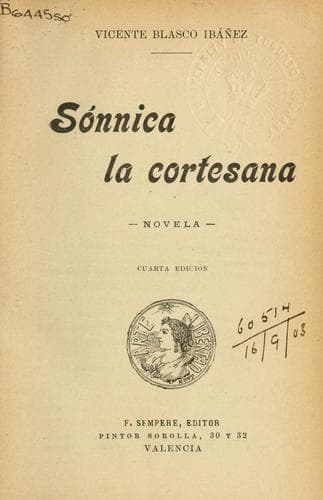
Sagunto (Spain) -- History -- Siege, 219-218 B.C. -- Fiction
The two legates from Saguntum walked up the temple steps. Under the
columns which sustained the pediment were numberless piles of loot from
the last wars, deposited by the conquerors as they paraded through the
Forum before the multitude, which had hailed them, waving branches of
laurel. Actæon saw shields pierced by iron swords, rusted by blood;
war-chariots with broken tongues, the gilded wheels bespattered with the
mud of battles. They were spoils from the war with the Samnites. Farther
on, standing along the wall, a row of hideous wooden dwarfs, dyed red
and blue, stripped from the prows of Carthaginian ships after the great
victory at the Ægates Islands; iron bars which had closed the gates of
many cities conquered by the Romans; the golden standards decorated with
fantastic animals which led the troops of Pyrrhus; the enormous tusks of
the elephants which this descendent of Achilles had marched against the
legions of Rome; the horned or eagle-winged helmet of the Ligurians; the
darts of Alpine tribes, and, beside the door, as a trophy of honor, the
armor of the glorious Camillus, paraded in triumph by the city after
this great Roman had driven the Gauls from the Capitol. Along the walls,
as a strange decoration, hung a long dark tissue, crisp as parchment. It
was the skin of the great serpent which for a whole day held back the
army of Atilius Regulus, when on his expedition to Africa he was
marching to the conquest of Carthage. The horrible monster, insensible
to arrows, devoured many soldiers before it succumbed beneath a shower
of stones, and Regulus sent the reptile's skin to Rome as a testimony of
the adventure.
The envoys from Saguntum had a tedious wait before a centurion ushered
them into the Senaculum.
The Greek, sweeping his glance over the semicircle, was perturbed by the
majesty of the assemblage. He recalled the entrance of the Gauls into
Rome; the stupefaction of the barbarians in the presence of those
Elders, firm in their marble chairs, wrapped like phantoms in their
snowy garments which left uncovered only their silvery beards; their
ivory staves held with a divine majesty, revealed again in the gleam
from their steady eyes. None but barbarians intoxicated with blood-lust
would dare to assault men of such patriarchal dignity.
Public-domain text, read in full here on John Shaqi.
Reviews
Reviews
No reviews yet
Be the first to share your thoughts on this work.
Elsewhere in the archive
Join the Discussion
Join the discussion
Sign in to leave a comment or review.
Sign InorCreate an account