Him I call indeed a Brâhmana from whom anger and hatred, pride and
hypocrisy have dropped like a mustard seed from the point of a needle.
Him I call indeed a Brâhmana who utters true speech, instructive and
free from harshness, so that he offend no one.
Him I call indeed a Brâhmana who takes nothing in the world that is not
given him, be it long or short, small or large, good or bad.
Him I call indeed a Brâhmana who fosters no desires for this world or
for the next, has no inclinations, and is unshackled.
Him I call indeed a Brâhmana who has no interests, and when he has
understood the truth, does not say How, how? and who has reached the
depth of the Immortal.
Him I call indeed a Brâhmana who in this world has risen above both
ties, good and evil, who is free from grief, from sin, and from
impurity.
Him I call indeed a Brâhmana who is bright like the moon, pure, serene,
undisturbed, and in whom all gayety is extinct.
Him I call indeed a Brâhmana who has traversed this miry road, the
impassable world, difficult to pass, and its vanity, who has gone
through, and reached the other shore, is thoughtful, steadfast, free
from doubts, free from attachment, and content.
Him I call indeed a Brâhmana who in this world, having abandoned all
desires, travels about without a home, and in whom all concupiscence is
extinct.
Him I call indeed a Brâhmana who, having abandoned all longings, travels
about without a home, and in whom all covetousness is extinct.
Him I call indeed a Brâhmana who, after leaving all bondage to men, has
risen above all bondage to the gods, and is free from all and every
bondage.
Him I call indeed a Brâhmana who has left what gives pleasure and what
gives pain, who is cold, and free from all germs of renewed life: the
hero who has conquered all the worlds.
Him I call indeed a Brâhmana who knows the destruction and the return of
beings everywhere, who is free from bondage, welfaring (Sugata), and
awakened (Buddha).
Him I call indeed a Brâhmana whose path the gods do not know, nor
spirits (Gandharvas), nor men, whose passions are extinct, and who is an
Arhat.
Him I call indeed a Brâhmana who calls nothing his own, whether it be
before, behind, or between; who is poor, and free from the love of the
world.
Him I call indeed a Brâhmana, the manly, the noble, the hero, the great
sage, the conqueror, the indifferent, the accomplished, the awakened.
Him I call indeed a Brâhmana who knows his former abodes, who sees
heaven and hell, has reached the end of births, is perfect in knowledge,
a sage, and whose perfections are all perfect.
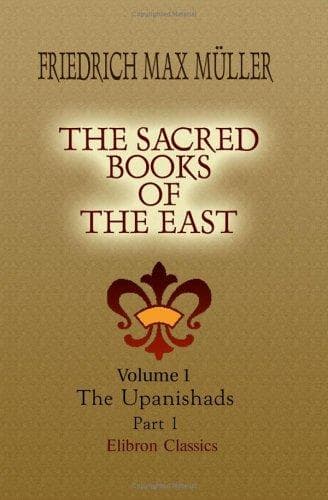
THE UPANISHADS
Translation by F. Max Müller
INTRODUCTION
Public-domain text, read in full here on John Shaqi.
Reviews
Reviews
No reviews yet
Be the first to share your thoughts on this work.
Elsewhere in the archive
Join the Discussion
Join the discussion
Sign in to leave a comment or review.
Sign InorCreate an account