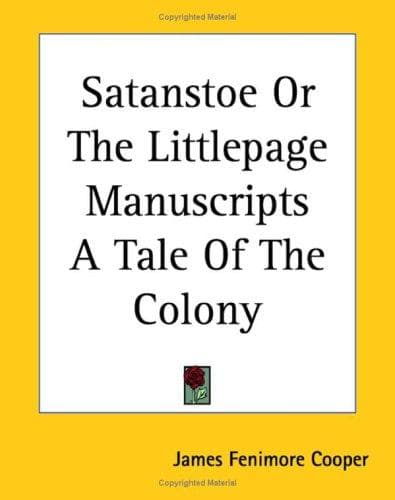
Satanstoe; Or, the Littlepage Manuscripts. A Tale of the ColonyCooper, James Fenimore
General
Satanstoe; Or, the Littlepage Manuscripts. A Tale of the Colony
Cooper, James Fenimore
Antirent War, N.Y., 1839-1846 -- Fiction
There was no withstanding this frankness, and so much good-temper. We shook
hands most cordially; Bulstrode raised his hat and bowed; after which
he rode away, as I fancied, at a slow, thoughtful, reluctant pace.
Notwithstanding the kindness of this parting, I had more cause than ever to
regret Bulstrode had appeared among us; and the scenes of that morning only
confirmed me in a resolution, previously adopted, not to urge Anneke to any
decision, in my case, at a moment when I felt there might be so much danger
it would be adverse.
CHAPTER XX.
“Come, let a proper text be read,
An' touch it aff wi' vigour,
How graceless Ham leugh at his dad,
Which made Canaan a nigger.”
BURNS.
Ten days after the departure of the ----th, Herman Mordaunt and his
family, with our own party, left Albany, on the summer's business. In that
interval, however, great changes had taken place in the military aspect of
things. Several regiments of King's troops ascended the Hudson, most of the
sloops on the river, of which there could not have been fewer than thirty
or forty, having been employed in transporting them and their stores. Two
or three corps came across the country, from the eastern colonies,
while several provincial regiments appeared; everything tending to a
concentration at this point, the head of navigation on the Hudson. Among
other men of mark, who accompanied the troops, was Lord Viscount Howe, the
nobleman of whom Herman Mordaunt had spoken. He bore the local rank of
Brigadier, [32] and seemed to be the very soul of the army. It was not his
personal consideration alone, that placed him so high in the estimation
of the public and of the troops, but his professional reputation, and
professional services. There were many young men of rank in the army
present; and, as for younger sons of peers, there were enough to make
honourables almost as plenty, at Albany, as they were at Boston. Most of
the colonial families of mark had sons in the service, too; those of the
middle and southern colonies bearing commissions in regular regiments,
while the provincial troops from the eastern were led, as was very usual,
in that quarter of the country, by men of the class of yeomen, in a great
degree; the habits of equality that prevailed in those provinces making few
distinctions, on the score of birth or fortune.
Public-domain text, read in full here on John Shaqi.
Reviews
Reviews
No reviews yet
Be the first to share your thoughts on this work.
Elsewhere in the archive
Join the Discussion
Join the discussion
Sign in to leave a comment or review.
Sign InorCreate an account