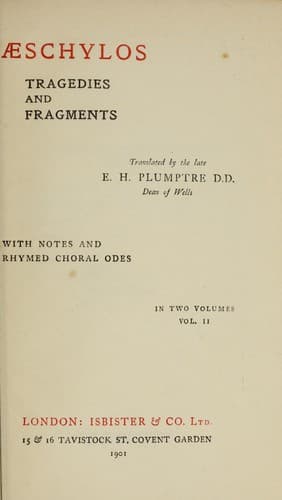
Aeschylus -- Translations into English; Mythology, Greek -- Drama
ANTISTROPHE IV
And then the elder of the chiefs thus cried:
“Great woe it is the Gods to disobey;
Great woe if I my child, my home's fond pride,
With my own hands must slay,
Polluting with the streams of maiden's blood
A father's hands, the holy altar near.
Which course hath least of good?
How can I loss of ships and comrades bear?
Right well may men desire,
With craving strong, the blood of maiden pure
As charm to lull the winds and calm ensure;
Ah, may there come the good to which our hopes aspire!”
STROPHE V
Then, when he his spirit proud
To the yoke of doom had bowed,
While the blasts of altered mood
O'er his soul swept like a flood,
Reckless, godless and unblest;
Thence new thoughts upon him pressed,
Thoughts of evil, frenzied daring,
(Still doth passion, base guile sharing,
Mother of all evil, hold
The power to make men bad and bold,)
And he brought himself to slay
His daughter, as on solemn day,
Victim slain the ship to save,
When for false wife fought the brave.
ANTISTROPHE V
All her cries and loud acclaim,
Calling on her father's name,—
All her beauty fresh and fair,
They heeded not in their despair,
Their eager lust for conflict there.
And her sire the attendants bade
To lift her, when the prayer was said,
Above the altar like a kid,
Her face and form in thick veil hid;
Yea, with ruthless heart and bold,
O'er her gracious lips to hold
Their watch, and with the gag's dumb pain
From evil-boding words restrain.
STROPHE VI
And then upon the ground
Pouring the golden streams of saffron veil,
She cast a glance around
That told its piteous tale,
At each of those who stood prepared to slay,
Fair as the form by skilful artist drawn,
And wishing, all in vain, her thoughts to say;
For oft of old in maiden youth's first dawn,
Within her father's hall,
Her voice to song did call,
To chant the praises of her sire's high state,
His fame, thrice blest of Heaven, to celebrate.
What then ensued mine eyes
Saw not, nor may I tell, but not in vain
The arts of Calchas wise;
For justice sends again,
The lesson “pain is gain” for them to learn:
But for our piteous fate since help is none,
With voice that bids “Good-bye,” we from it turn
Ere yet it come, and this is all as one
With weeping ere the hour,
For soon will come in power
To-morrow's dawn, and good luck with it come!
So speaks the guardian of this Apian home.
VERSES 346-471
Public-domain text, read in full here on John Shaqi.
Reviews
Reviews
No reviews yet
Be the first to share your thoughts on this work.
Elsewhere in the archive
Join the Discussion
Join the discussion
Sign in to leave a comment or review.
Sign InorCreate an account