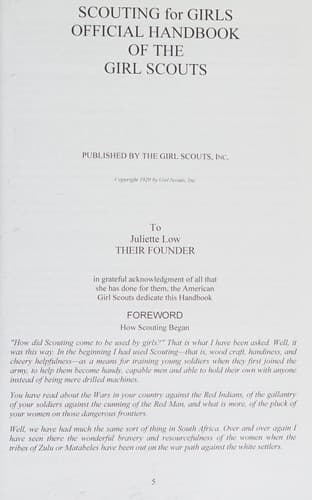
Scouting For Girls, Official Handbook of the Girl ScoutsGirl Scouts of the United States of America
History
Scouting For Girls, Official Handbook of the Girl Scouts
Girl Scouts of the United States of America
Girl Scouts -- Handbooks, manuals, etc.
hydroids that look like moss, sea-anemones, many varieties of worms,
mussels and crabs are all living here.
[Illustration: UNDER THE SEA BED
Marine Worms, Whelk, Pecten or Scallop and Periwinkle]
Begin your study of these seashore animals with a stroll along the
beach. Examine the windrows of seawrack or seaweed. Whole troops of
sandhoppers rise ahead of you. Oftentimes animals from distant shores or
deep water will be found. The empty shells have many a story to tell.
The papery egg-cases of the periwinkle remind one of a beautiful
necklace. The air bubbles rising from the sand or mud as the wave
recedes mark the entrance to the burrows of worms. Stamp hard on the
sand. A little fountain of water announces the abode of the soft clam.
Watch the sand at the edges of the rippling water. The mole-crab may be
seen scuttling to cover. In the little hollows between rocks a rock-crab
or a green-crab may be found on guard.
[Illustration: WHELK (FULGUR CANALICULATA) AND EGG-CASES
Common Mollusk Found on Sandy Shores Along the Atlantic Coast of the
United States.]
For collecting in the pools and shallow water a fine-meshed net is
desirable. Many of the animals can be caught and placed in glass dishes
of sea water for close observation.
[Illustration: Group showing a starfish attacking an oyster; soft
shelled clams; hermit crabs; fiddler crabs, etc.]
_A few animals that may be found at the seashore:_
_Rocky Shores_--Hydroids on the rock-weed, rock-barnacles, snails,
amphipods, lobsters, and oysters.
_Sandy Shores_--Worms, in tube houses, mole-crab, sand-hopper,
egg-cases, whelks, shrimps.
_Muddy Shores_--Snails, clams, worms of many varieties, mud-crabs,
hermit-crabs, blue crabs, scallops.
_Wharves and Bridges_ (on the piling)--Sponges, hydroids, sea-anemones,
ascidians, starfishes, sea-urchins, worms.
On the shores of lakes, ponds, and streams will also be found many
invertebrates.
[Illustration: HUMMINGBIRD MOTH
Range: Eastern North America. The larvae or caterpillars of this moth
feed upon virburnum, snowberry and hawthorn.]
[Illustration: SEVENTEEN-YEAR CICADA OR SEVENTEEN-YEAR "LOCUST"
Range: Eastern United States. Pupae emerging from the ground. Detail
from Group in the American Museum of Natural History.]
Insects play an important part in Nature's activities. From the point of
view of man some are beneficial and some are destructive. In the former
group may be mentioned the Dragonflies which feed upon mosquitoes, the
Cochineal insects of Mexico, which furnish a dye-stuff, the Lady-bird
beetles, which in the larval stage feed upon plant lice; the scale
insects of India, which furnish shellac; the Bumblebees, which
cross-pollinate the clover, and the Wasps, which fertilize the figs. Dr.
Lutz says that the manna which fed the Children of Israel was honeydew
secreted by a scale insect, and that it is still eaten.
[Illustration: SEVENTEEN-YEAR CICADA OR SEVENTEEN-YEAR "LOCUST"
Public-domain text, read in full here on John Shaqi.
Reviews
Reviews
No reviews yet
Be the first to share your thoughts on this work.
Elsewhere in the archive
Join the Discussion
Join the discussion
Sign in to leave a comment or review.
Sign InorCreate an account