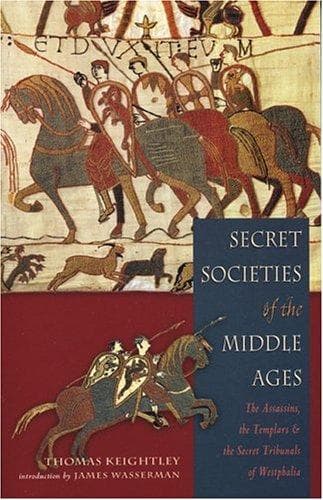
Secret Societies of the Middle AgesKeightley, Thomas
History
Secret Societies of the Middle Ages
Keightley, Thomas
Secret societies
The abuses of pilgrimage were early discerned, and some of the more
pious Fathers of the Church preached and wrote against the practice. But
piety and eloquence were vain, and could little avail to stem the
torrent when men believed that the waters of Jordan had efficacy to wash
every sin, though unattended by sincere repentance. The Church, as she
advanced in corruption, improved in worldly wisdom, and, taking
pilgrimage under her protection, made it a part of her penal discipline.
The sinner was now ordered a journey to the Holy Land as a means of
freeing his soul from the guilt of his perhaps manifold enormities. Each
year saw the number of the pilgrims augment, while the growing
veneration for relics, of which those which came from the Holy Land were
esteemed the most efficacious, stimulated pilgrimage by adding the
incentive of profit, as a small stock of money laid out in the purchase
of the generally counterfeit relics always on sale at Jerusalem would
produce perhaps a thousand per cent. on the return of the pilgrim to his
native country. A pilgrim was also held in respect and veneration
wherever he came, as an especial favourite of the Divinity, having been
admitted by him to the high privilege of visiting the sacred places, a
portion of whose sanctity it would be supposed might still adhere to
him.
The 11th century was the great season of pilgrimage. A strange
misconception of the meaning of a portion of Scripture had led men to
fancy that the year 1000 was to be that of the advent of Christ, to
judge the world. As the valley of Jehoshaphat was believed to be the
spot on which this awful event would take place, the same feeling which
leads people at the present day to lay a flattering unction to their
souls by supposing that death-bed repentance will prove equivalent in
the sight of God to a life passed in obedience to his will and in the
exercise of virtue, impelled numbers to journey to the Holy Land, in the
belief that this officiousness, as it were, of hitherto negligent
servants would be well taken by their Lord, and procure them an
indulgent hearing before his judgment-seat. Pilgrimage, therefore,
increased greatly; the failure of their expectations, the appointed time
having passed away without the Son of Man coming in the clouds of
Heaven, gave it no check, but, on the contrary, rather an additional
impulse; and during this century the caravans of pilgrims attained to
such magnitude and strength as to be deserving of the appellation of
_The armies of the Lord_--precursive of the first and greatest Crusade.
Public-domain text, read in full here on John Shaqi.
Reviews
Reviews
No reviews yet
Be the first to share your thoughts on this work.
Elsewhere in the archive
Join the Discussion
Join the discussion
Sign in to leave a comment or review.
Sign InorCreate an account