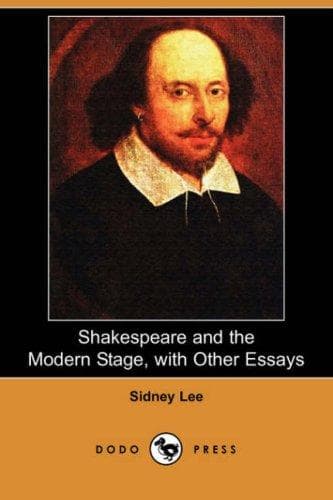
Shakespeare and the Modern Stage; with Other EssaysLee, Sidney, Sir
History
Shakespeare and the Modern Stage; with Other Essays
Lee, Sidney, Sir
Shakespeare, William, 1564-1616; Shakespeare, William, 1564-1616 -- Stage history
Nothing but good can come of a comparative study of English and French
literature. The political intercourse of the two countries has
involved them in an endless series of broils. But between the
literatures of the two countries friendly relations have subsisted for
over five centuries. In the literary sphere the interchange of
neighbourly civilities has known no interruption. The same literary
forms have not appealed to the tastes of the two nations; but
differences of aesthetic temperament have not prevented the literature
of the one from levying substantial loans on the literature of the
other, and that with a freedom and a frequency which were calculated
to breed discontent between any but the most cordial of allies. While
the literary geniuses of the two nations have pursued independent
ideals, they have viewed as welcome courtesies the willingness and
readiness of the one to borrow sustenance of the other on the road. It
is unlikely that any full or formal balance-sheet of such lendings and
borrowings will ever be forthcoming, for it is felt instinctively by
literary accountants and their clients on both shores of the English
Channel that the debts on the one side keep a steady pace with the
debts on the other, and there is no balance to be collected.
No recondite research is needed to establish this general view
of the situation. It is well known how the poetic career of Chaucer,
the earliest of great English poets, was begun under French masters.
The greatest poem of mediaeval France, the _Roman de la Rose_,
was turned into English by his youthful pen, and the chief French
poet of the day, Eustace Deschamps, held out to him the hand of
fellowship in the enthusiastic _balade_, in which he apostrophised
"le grand translateur, noble Geoffroi Chaucer." Following Chaucer's
example, the great poets of Elizabeth's reign and of James the
First's reign most liberally and most literally assimilated the
verse of their French contemporaries, Ronsard, Du Bellay, and
Desportes.[42] Early in the seventeenth century, Frenchmen returned
the compliment by naturalising in French translations the prose
romances of Sir Philip Sidney and Robert Greene, the philosophical
essays of Bacon, and the ethical and theological writings of Bishop
Joseph Hall. From the accession of Charles the Second until that
of George the Third, the English drama framed itself on French
models, and Pope, who long filled the throne of a literary dictator
in England, acknowledged discipleship to Boileau. A little later the
literary philosophers of France--Rousseau and the Encyclopedistes--drew
their nutrition from the writings of Hobbes and Locke. French
novel-readers of the eighteenth century found their chief joy in the
tearful emotions excited by the sentimentalities of Richardson and
Sterne. French novel-writers one hundred and thirty years ago had
small chance of recognition if they disdained to traffic in the
Public-domain text, read in full here on John Shaqi.
Reviews
Reviews
No reviews yet
Be the first to share your thoughts on this work.
Elsewhere in the archive
Join the Discussion
Join the discussion
Sign in to leave a comment or review.
Sign InorCreate an account