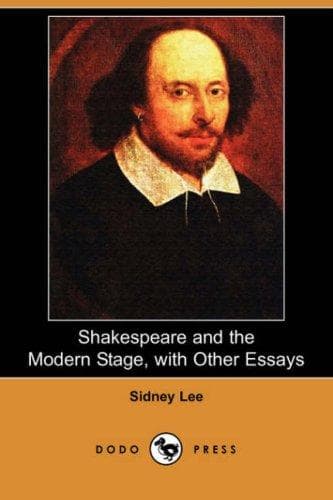
Shakespeare and the Modern Stage; with Other EssaysLee, Sidney, Sir
History
Shakespeare and the Modern Stage; with Other Essays
Lee, Sidney, Sir
Shakespeare, William, 1564-1616; Shakespeare, William, 1564-1616 -- Stage history
In spite of this widespread feeling, it proved no easy task, nor one
capable of rapid fulfilment, to consecrate in permanence to public
uses the extant memorials of Shakespeare at Stratford-on-Avon.
Stratford was a place of pilgrimage for admirers of Shakespeare from
early days in the seventeenth century--soon, in fact, after
Shakespeare's death in 1616. But local veneration did not prevent the
demolition in 1759, by a private owner, of New Place, Shakespeare's
last residence. That act of vandalism was long in provoking any
effective resentment. Garrick, by means of his Jubilee Festival of
1769, effectively, if somewhat theatrically, called the attention of
the English public to the claims of the town to the affectionate
regard of lovers of the great dramatist. Nevertheless, it was left to
the nineteenth century to dedicate in perpetuity to the public service
the places which were the scenes of Shakespeare's private life in his
native town.
Charles Mathews's effort of 1821 took its rise in an endeavour to
purchase in behalf of the nation the vacant site of Shakespeare's
demolished residence of New Place, with the great garden attached to
it. But that scheme was overweighted by the incorporation with it of
the plan for a London monument, and both collapsed ignominiously. In
1835 a strong committee was formed at Stratford to commemorate the
poet's connection with the town. It was called "the Monumental
Committee," and had for its object, firstly, the repair of
Shakespeare's tomb in the Parish Church; and secondly, the
preservation and restoration of all the Shakespearean buildings in
the town. Subscriptions were limited to L1, and all the members of the
royal family, including the Princess Victoria, who two years later
came to the throne, figured, with other leading personages in the
nation's life, in the list of subscribers. But the subscriptions only
produced a sum sufficient to carry out the first purpose of the
Monumental Committee--the repair of the tomb.
Public-domain text, read in full here on John Shaqi.
Reviews
Reviews
No reviews yet
Be the first to share your thoughts on this work.
Elsewhere in the archive
Join the Discussion
Join the discussion
Sign in to leave a comment or review.
Sign InorCreate an account