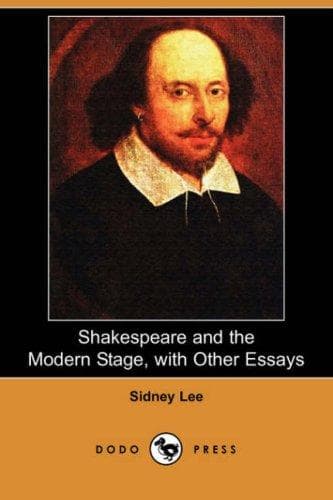
Shakespeare and the Modern Stage; with Other EssaysLee, Sidney, Sir
History
Shakespeare and the Modern Stage; with Other Essays
Lee, Sidney, Sir
Shakespeare, William, 1564-1616; Shakespeare, William, 1564-1616 -- Stage history
There are obviously greater difficulties in erecting a monument to
Shakespeare in London than in erecting a monument to Scott in
Edinburgh. There is no site in London that will compare with the
gardens of Princes Street in Edinburgh. It is essential that a
Shakespeare memorial should occupy the best site that London can
offer. Ideally the best site for any great monument is the summit of a
gently rising eminence, with a roadway directly approaching it and
circling round it. In 1864, when the question of a fit site for a
Shakespeare memorial in London was warmly debated, a too ambitious
scheme recommended the formation of an avenue on the model of the
Champs-Elysees from the top of Portland Place across Primrose Hill;
and at the end of the avenue, on the summit of Primrose Hill, at an
elevation of 207 feet above the river Thames, the Shakespeare monument
was to stand. This was and is an impracticable proposal. The site
which in 1864 received the largest measure of approbation was a spot
in the Green Park, near Piccadilly. A third suggestion of the same
date was the bank of the river Thames, which was then called
Thames-way, but was on the point of conversion into the Thames
Embankment. Recent reconstruction of Central London--of the district
north of the Strand--by the London County Council now widens the field
of choice. There is much to be said for a site within the centre of
London life. But an elevated monumental structure on the banks of the
Thames seems to meet at the moment with the widest approval. In any
case, no site that is mean or cramped would be permissible if the
essential needs of the situation are to be met.
A monument that should be sufficiently imposing would need an
architectural framework. But the figure of the poet must occupy the
foremost place in the design. Herein lies another embarrassment. It is
difficult to determine which of the extant portraits the sculptor
ought to follow. The bust in Stratford Church, the print in the First
Folio, and possibly the Chandos painting in the National Portrait
Gallery, are honest efforts to present a faithful likeness. But they
are crudely executed, and are posthumous sketches largely depending on
the artist's memory. The sculptor would be compelled to work in the
spirit of the historian, who recreates a past event from the
indication given him by an illiterate or fragmentary chronicle or
inscription. He would be bound to endow with artistic life those
features in which the authentic portraits agree, but the highest
effort of the imagination would be needed to create an impression of
artistic truth.
Public-domain text, read in full here on John Shaqi.
Reviews
Reviews
No reviews yet
Be the first to share your thoughts on this work.
Elsewhere in the archive
Join the Discussion
Join the discussion
Sign in to leave a comment or review.
Sign InorCreate an account