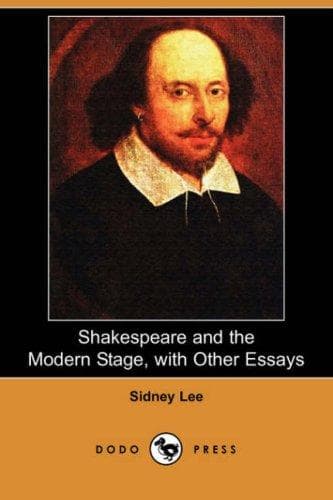
Shakespeare and the Modern Stage; with Other EssaysLee, Sidney, Sir
History
Shakespeare and the Modern Stage; with Other Essays
Lee, Sidney, Sir
Shakespeare, William, 1564-1616; Shakespeare, William, 1564-1616 -- Stage history
In Shakespeare's case their message was not long neglected. In 1709
Nicholas Rowe, afterwards George the First's poet laureate, published
the first professed biography of the poet. The eminence of the
subject justified such alacrity, and it had no precise parallel. More
or less definite lives of a few of Shakespeare's great literary
contemporaries followed his biography at long intervals. But the whole
field has never been occupied by the professed biographer. In some
cases the delay has meant loss of opportunity for ever. Very many
distinguished Elizabethan and Jacobean authors have shared the fate of
John Webster, next to Shakespeare the most eminent tragic dramatist of
the era, of whom no biography was ever attempted, and no positive
biographic fact survives.
But this is an imperfect statement of the advantages which
Shakespeare's career enjoyed above that of his fellows from the
commemorative point of view. Although formal biography did not lay
hand on his name for nearly a century after his death, the authentic
tradition of his life and work began steadily to crystallise in the
minds and mouths of men almost as soon as he drew his last breath.
Fuller's characteristically shadowy hint of "wit-combats betwixt
Shakespeare and Ben Jonson" and of the contrasted characters of the
two combatants, suggests pretty convincingly that Shakespeare's name
presented to the seventeenth-century imagination and tongue a better
defined personality and experience than the embryonic biographer knew
how to disclose. The commemorative instinct never seeks satisfaction
in biographic effort exclusively, even when the art of biography has
ripened into satisfying fulness. A great man's reputation and the
moving incidents of his career never live solely in the printed book
or the literary word. In a great man's lifetime, and for many years
after, his fame and his fortunes live most effectually on living lips.
The talk of surviving kinsmen, fellow-craftsmen, admiring
acquaintances, and sympathetic friends is the treasure-house which
best preserves the personality of the dead hero for those who come
soon after him. When biography is unpractised, no other treasure-house
is available.
Public-domain text, read in full here on John Shaqi.
Reviews
Reviews
No reviews yet
Be the first to share your thoughts on this work.
Join the Discussion
Join the discussion
Sign in to leave a comment or review.
Sign InorCreate an account