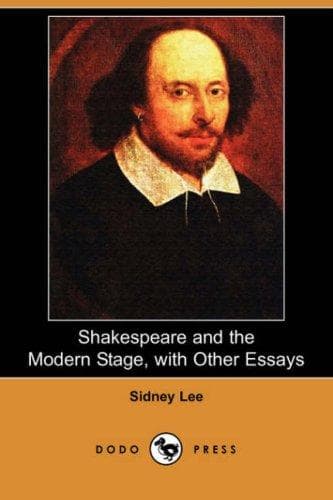
Shakespeare and the Modern Stage; with Other EssaysLee, Sidney, Sir
History
Shakespeare and the Modern Stage; with Other Essays
Lee, Sidney, Sir
Shakespeare, William, 1564-1616; Shakespeare, William, 1564-1616 -- Stage history
Many were the wit-combats betwixt him and Ben Jonson; which
two I behold like a Spanish great galleon and an English
man-of-war: master Jonson (like the former) was built far
higher in learning; solid, but slow, in his performances.
Shakespeare, with the English man-of-war, lesser in bulk,
but lighter in sailing, could turn with all tides, tack
about, and take advantage of all winds, by the quickness of
his wit and invention. He died _Anno Domini_ 1616, and was
buried at Stratford-upon-Avon, the town of his nativity.
Fuller's successors did their work better in some regards, because
they laboured in narrower fields. Many of them showed a welcome
appreciation of a main source of their country's permanent reputation
by confining their energies to the production of biographical
catalogues, not of all manners of heroes, but solely of those who had
distinguished themselves in poetry and the drama.[10] In 1675 a
biographical catalogue of poets was issued for the first time in
England, and the example once set was quickly followed. No less than
three more efforts of the like kind came to fruition before the end of
the century.
[Footnote 10: Such a compilation had been contemplated in 1614, two
years before the dramatist died, by one of Shakespeare's own
associates, Thomas Heywood. Twenty-one years later, in 1635, Heywood
spoke of "committing to the public view" his summary _Lives of the
Poets_, but nothing more was heard of that project.]
In all four biographical manuals Shakespeare was accorded more or less
imposing space. Although Fuller's eccentric compliments were usually
repeated, they were mingled with far more extended and discriminating
tributes. Two of the compilers designated Shakespeare "the glory of
the English stage"; a third wrote, "I esteem his plays beyond any that
have ever been published in our language"; while the fourth quoted
with approval Dryden's fine phrase: "Shakespeare was the Man who of
all Modern and perhaps Ancient Poets had the largest and most
comprehensive Soul." But the avowed principles of these tantalising
volumes justify no expectation of finding in them solid information.
The biographical cataloguers of the seventeenth century did little
more than proclaim Shakespeare and the other great poets of the
country to be fit subjects for formal biography as soon as the type
should be matured. That was the message of greatest virtue which these
halting chroniclers delivered.
Public-domain text, read in full here on John Shaqi.
Reviews
Reviews
No reviews yet
Be the first to share your thoughts on this work.
Join the Discussion
Join the discussion
Sign in to leave a comment or review.
Sign InorCreate an account