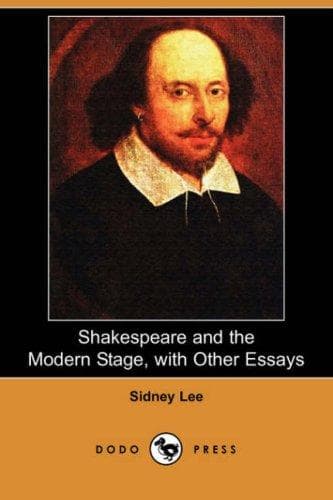
Shakespeare and the Modern Stage; with Other EssaysLee, Sidney, Sir
History
Shakespeare and the Modern Stage; with Other Essays
Lee, Sidney, Sir
Shakespeare, William, 1564-1616; Shakespeare, William, 1564-1616 -- Stage history
Christopher's son, William Beeston the second, was his father's
coadjutor at Drury Lane, and succeeded him in his high managerial
office there. The son encountered difficulties with the Government
through an alleged insult to the King in one of the pieces that he
produced, and he had to retire from the Cockpit to a smaller theatre
in Salisbury Court. Until his death he retained the respect of the
play-going and the literature-loving public, and his son George, whom
he brought up to the stage, carried on the family repute to a later
generation.
William Beeston had no liking for dissolute society, and the open vice
of Charles the Second's Court pained him. He lived in old age much in
seclusion, but by a congenial circle he was always warmly welcomed for
the freshness and enthusiasm of his talk about the poets who
flourished in his youth. "Divers times (in my hearing)," one of his
auditors, Francis Kirkman, an ardent collector, reader, and publisher
of old plays, wrote to him in 1652--"Divers times (in my hearing), to
the admiration of the whole company you have most judiciously
discoursed of Poesie." In the judgment of Kirkman, his friend, the old
actor, was "the happiest interpreter and judg of our English
stage-Playes this Nation ever produced; which the Poets and Actors
these times cannot (without ingratitude) deny; for I have heard the
chief, and most ingenious of them, acknowledg their Fames and Profits
essentially sprung from your instructions, judgment, and fancy." Few
who heard Beeston talk failed, Kirkman continues, to subscribe "to his
opinion that no Nation could glory in such Playes" as those that came
from the pens of the great Elizabethans, Shakespeare, Fletcher, and
Ben Jonson. "Glorious John Dryden" shared in the general enthusiasm
for the veteran Beeston, and bestowed on him the title of "the
chronicle of the stage"; while John Aubrey, the honest antiquary and
gossip, who had in his disorderly brain the makings of a Boswell,
sought Beeston's personal acquaintance about 1660, in order to "take
from him the lives of the old English Poets."
Public-domain text, read in full here on John Shaqi.
Reviews
Reviews
No reviews yet
Be the first to share your thoughts on this work.
Elsewhere in the archive
Join the Discussion
Join the discussion
Sign in to leave a comment or review.
Sign InorCreate an account