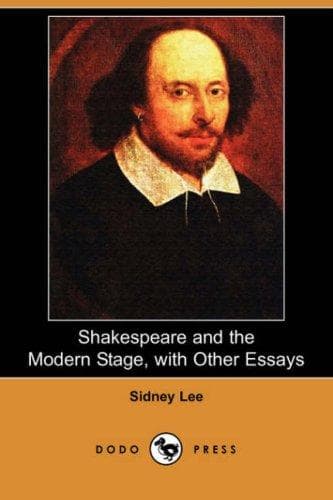
Shakespeare and the Modern Stage; with Other EssaysLee, Sidney, Sir
History
Shakespeare and the Modern Stage; with Other Essays
Lee, Sidney, Sir
Shakespeare, William, 1564-1616; Shakespeare, William, 1564-1616 -- Stage history
At the same time, the popularity of Shakespeare's grand-nephew,
Charles Hart, who was called the Burbage of his day, whetted among
actors the appetite for Shakespearean tradition, especially of the
theatrical kind. Hart had no direct acquaintance with his great
kinsman, who died fully ten years before he was born, while his
father, who was sixteen at Shakespeare's death, died in his son's
boyhood. But Hart's grandmother, the poet's sister, lived till he was
twenty-one, and Richard Robinson, the fellow-member of Shakespeare's
company who first taught Hart to act, survived his pupil's
adolescence. That Hart did what he could to satisfy the curiosity of
his companions there is a precise oral tradition to confirm. According
to the story, first put on record in the eighteenth century by the
painstaking antiquary, William Oldys, it was through Hart that some
actors made, near the date of the Restoration, the exciting discovery
that Gilbert, one of Shakespeare's brothers, who was the dramatist's
junior by only two years, was still living at a patriarchal age. Oldys
describes the concern with which Hart's professional acquaintances
questioned the old man about his brother, and their disappointment
when his failing memory only enabled him to recall William's
performance of the part of Adam in his comedy of _As You Like It_.
It should be added that Oldys obtained his information of the episode,
which deserves more attention than it has received, from an actor of
a comparatively recent generation, John Bowman, who died over eighty
in 1739, after spending "more than half an age on the London
theatres."
V
Valuable as these actors' testimonies are, it is in another rank of
the profession that we find the most important link in the chain of
witnesses alike to the persistence and authenticity of the oral
tradition of Shakespeare which was current in the middle of the
seventeenth century. Sir William D'Avenant, the chief playwright and
promoter of theatrical enterprise of his day, enjoyed among persons of
influence and quality infinite credit and confidence. As a boy he and
his brothers had come into personal relations with the dramatist under
their father's roof, and the experience remained the proudest boast of
their lives. D'Avenant was little more than ten when Shakespeare died,
and his direct intercourse with him was consequently slender; but
D'Avenant was a child of the Muses, and his slight acquaintance with
the living Shakespeare spurred him to treasure all that he could learn
of his hero from any who had enjoyed fuller opportunities of intimacy.
Public-domain text, read in full here on John Shaqi.
Reviews
Reviews
No reviews yet
Be the first to share your thoughts on this work.
Elsewhere in the archive
Join the Discussion
Join the discussion
Sign in to leave a comment or review.
Sign InorCreate an account