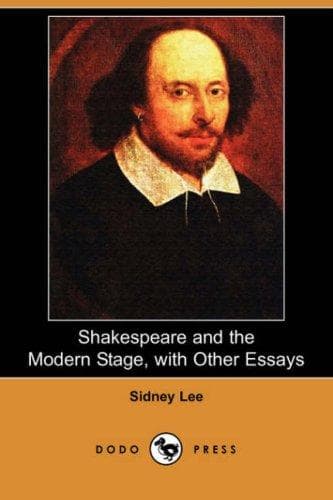
Shakespeare and the Modern Stage; with Other EssaysLee, Sidney, Sir
History
Shakespeare and the Modern Stage; with Other Essays
Lee, Sidney, Sir
Shakespeare, William, 1564-1616; Shakespeare, William, 1564-1616 -- Stage history
Never was there a more indefatigable playgoer than Pepys. Yet his
enthusiasm for the theatre was, to his mind, a failing which required
most careful watching. He feared that the passion might do injury to
his purse, might distract him from serious business, might lead him
into temptation of the flesh. He had a little of the Puritan's dread
of the playhouse. He was constantly taking vows to curb his love of
plays, which "mightily troubled his mind." He was frequently resolving
to abstain from the theatre for four or five months at a stretch, and
then to go only in the company of his wife. During these periods of
abstinence he was in the habit of reading over his vows every Sunday.
But, in spite of all his well-meaning efforts, his resolution was
constantly breaking down. On one occasion he perjured himself so
thoroughly as to witness two plays in one day, once in the afternoon
and again in the evening. On this riotous outbreak he makes the
characteristic comment: "Sad to think of the spending so much money,
and of venturing the breach of my vow." But he goes on to thank God
that he had the grace to feel sorry for the misdeed, at the same time
as he lamented that "his nature was so content to follow the pleasure
still." Pepys compounded with his conscience for such breaches of his
oath by all manner of casuistry. He excused himself for going,
contrary to his vow, to the new theatre in Drury Lane, because it was
not built when his vow was framed. Finally, he stipulated with himself
that he would only go to the theatre once a fortnight; but if he went
oftener he would give L10 to the poor. "This," he added, "I hope in
God will bind me." The last reference that he makes to his vows is
when, in contravention of them, he went with his wife to the Duke of
York's House, and found the place full, and himself unable to obtain
seats. He makes a final record of "the saving of his vow, to his great
content."
II
Public-domain text, read in full here on John Shaqi.
Reviews
Reviews
No reviews yet
Be the first to share your thoughts on this work.
Elsewhere in the archive
Join the Discussion
Join the discussion
Sign in to leave a comment or review.
Sign InorCreate an account