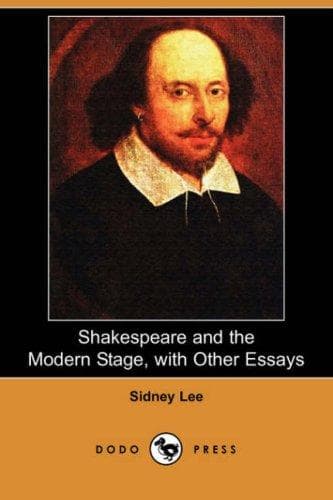
Shakespeare and the Modern Stage; with Other EssaysLee, Sidney, Sir
History
Shakespeare and the Modern Stage; with Other Essays
Lee, Sidney, Sir
Shakespeare, William, 1564-1616; Shakespeare, William, 1564-1616 -- Stage history
But these three theatres were in decay, and new and sumptuous
buildings soon took their places. One of the new playhouses was in
Portugal Row, Lincoln's Inn Fields; the other, on the site of the
present Drury Lane Theatre, was the first of the many playhouses that
sprang up there. It is to these two theatres--Lincoln's Inn Fields and
Drury Lane--that Pepys in his diary most often refers. He calls each
of them by many different names, and the unwary reader might infer
that London was very richly supplied with playhouses in Pepys's day.
But public theatres in active work at this period of our history were
not permitted by the authorities to exceed two. "The Opera" and "the
Duke's House" are merely Pepys's alternative designations of the
Lincoln's Inn Field's Theatre; while "the Theatre," "Theatre Royal,"
and "the King's House," are the varying titles which he bestows on the
Drury Lane Theatre.[15]
[Footnote 15: At the restoration of King Charles II., no more than two
companies of actors received licenses to perform in public. One of
these companies was directed by Sir William D'Avenant, Shakespeare's
reputed godson, and was under the patronage of the King's brother, the
Duke of York. The other was directed by Tom Killigrew, one of Charles
II.'s boon companions, and was under the patronage of the King
himself. In due time the Duke's, or D'Avenant's, company occupied the
theatre in Lincoln's Inn Fields, and the King's, or Killigrew's,
company occupied the new building in Drury Lane.]
Besides these two public theatres there was, in the final constitution
of the theatrical world in Pepys's London, a third, which stood on a
different footing. A theatre was attached to the King's Court at
Whitehall, and there performances were given at the King's command by
actors from the two public houses.[16] The private Whitehall theatre
was open to the public on payment, and Pepys was frequently there.
[Footnote 16: Charles II. formed this private theatre out of a
detached building in St James's Park, known as the "Cockpit," and to
be carefully distinguished from the Cockpit of Drury Lane. Part of the
edifice was occupied by courtiers by favour of the King. General Monk
had lodgings there. At a much later date, cabinet councils were often
held there.]
At one period of his life Pepys held that his vows did not apply to
the Court theatre, which was mainly distinguished from the other
houses by the circumstances that the performances were given at night.
At Lincoln's Inn Fields or Drury Lane it was only permitted to perform
in the afternoon. Half-past three was the usual hour for opening the
proceedings. At Whitehall the play began about eight, and often lasted
till near midnight.
Public-domain text, read in full here on John Shaqi.
Reviews
Reviews
No reviews yet
Be the first to share your thoughts on this work.
Elsewhere in the archive
Join the Discussion
Join the discussion
Sign in to leave a comment or review.
Sign InorCreate an account