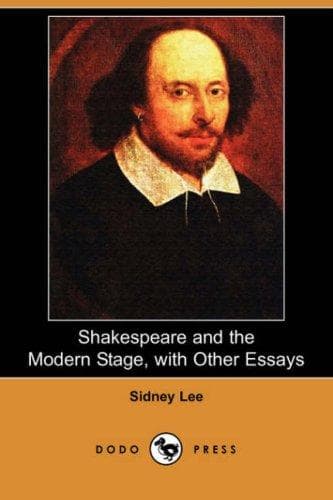
Shakespeare and the Modern Stage; with Other EssaysLee, Sidney, Sir
History
Shakespeare and the Modern Stage; with Other Essays
Lee, Sidney, Sir
Shakespeare, William, 1564-1616; Shakespeare, William, 1564-1616 -- Stage history
Mr Benson's efforts constitute the best organised endeavour to realise
Phelps's ambition since Phelps withdrew from management. Mr Benson's
scheme is imperfect in some of its details; in other particulars it
may need revision. But he and his associates have planted their feet
firmly on sure ground in their endeavours to interpret Shakespearean
drama constantly and in its variety, after a wise and well-considered
system and with a disinterested zeal. When every allowance has been
made for the Benson Company's shortcomings, its achievement cannot be
denied "a relish of salvation." Mr Benson deserves well of those who
have faith in the power of Shakespeare's words to widen the horizon of
men's intellects and emotions. The seed he has sown should not be
suffered to decay.
VI
THE MUNICIPAL THEATRE[23]
[Footnote 23: This paper was first printed in the _New Liberal
Review_, May 1902.]
I
Many actors, dramatic critics, and men in public life advocate the
municipal manner of theatrical enterprise. Their aim, as I understand
it, is to procure the erection, and the due working, of a playhouse
that shall serve in permanence the best interests of the literary or
artistic drama. The municipal theatre is not worth fighting for,
unless there is a reasonable probability that its establishment will
benefit dramatic art, promote the knowledge of dramatic literature,
and draw from the literary drama and confer on the public the largest
beneficial influence which the literary drama is capable of
distributing.
None of Shakespeare's countrymen or countrywomen can deny with a good
grace the importance of the drama as a branch of art. None will
seriously dispute that our dramatic literature, at any rate in its
loftiest manifestation, has contributed as much as our armies or our
navies or our mechanical inventions to our reputation through the
world.
There is substantial agreement among enlightened leaders of public
opinion in all civilised countries that great drama, when fitly
represented in the theatre, offers the rank and file of a nation
recreation which brings with it moral, intellectual, and spiritual
advantage.
II
The first question to consider is whether in England the existing
theatrical agencies promote for the general good the genuine interests
of dramatic art. Do existing theatrical agencies secure for the nation
all the beneficial influence that is derivable from the truly
competent form of drama? If they do this sufficiently, it is otiose
and impertinent to entertain the notion of creating any new theatrical
agency.
Public-domain text, read in full here on John Shaqi.
Reviews
Reviews
No reviews yet
Be the first to share your thoughts on this work.
Elsewhere in the archive
Join the Discussion
Join the discussion
Sign in to leave a comment or review.
Sign InorCreate an account