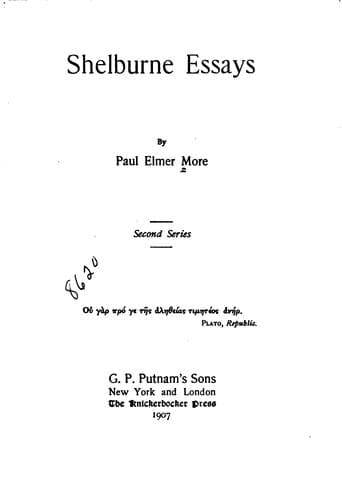
American literature -- History and criticism; English literature -- History and criticism
About this time, Mr. Sterne, the celebrated author, was taken ill
at the silk-bag shop in Old Bond Street. He was sometimes called
"Tristram Shandy," and sometime "Yorick"; a very great favourite
of the gentlemen's. One day my master had company to dinner, who
were speaking about him; the Duke of Roxburgh, the Earl of March,
the Earl of Ossory, the Duke of Grafton, Mr. Garrick, Mr. Hume,
and Mr. James. "John," said my master, "go and inquire how Mr.
Sterne is to-day." I went, returned, and said: I went to Mr.
Sterne's lodging; the mistress opened the door; I inquired how he
did. She told me to go up to the nurse; I went into the room, and
he was just a-dying. I waited ten minutes; but in five he said,
"Now it is come!" He put up his hand as if to stop a blow, and
died in a minute. The gentlemen were all very sorry, and lamented
him very much.
We have seen Corporal Trim in the kitchen dropping his hat as a symbol
of man's quick and humiliating collapse, but I think the attitude of
poor Yorick himself lying in his hired chamber, with hand upraised to
stop the invisible blow, a work of greater and still more astounding
genius. It was devised by the Master of gesture indeed, by him whose
puppets move on a wider stage than that of Shandy Hall.
J. HENRY SHORTHOUSE
Probably few people expected a work of more than mediocre interest when
they heard that Mrs. Shorthouse was preparing her husband's _Letters and
Literary Remains_ for the the press.[9] The life of a Birmingham
merchant, who in the course of his evenings elaborated one rather
mystical novel and then a few paler and abbreviated shadows of it, did
not, indeed, promise a great deal, and there is something to make one
shudder in the very sound of "literary remains." Nor would it have been
reassuring to know that these remains were for the most part short
essays and stories read at the social meetings of the Friends' Essay
Society of Birmingham. The manuscript records of such a club are not a
source to which one would naturally look for exhilarating literature,
yet from them, let me say at once, the editor has drawn a volume both
interesting and valuable. Mr. Shorthouse contributed to these meetings
for some twenty years, from the age of eighteen until he withdrew to
concentrate his energies upon _John Inglesant_, and it is worthy of
notice that his early sketches are, on the whole, better work than the
more elaborate essays, such as that on _The Platonism of Wordsworth_,
which followed the production of his masterpiece. He was to an
extraordinary degree _homo unius libri_, almost of a single thought, and
there is a certain freshness in his immature presentation of that idea
which was lost after it once received the stamp of definitive
expression. Hawthorne, we already knew, furnished the model for his
later method, but we feel a pleasant shock, such as always accompanies
Public-domain text, read in full here on John Shaqi.
Reviews
Reviews
No reviews yet
Be the first to share your thoughts on this work.
Elsewhere in the archive
Join the Discussion
Join the discussion
Sign in to leave a comment or review.
Sign InorCreate an account