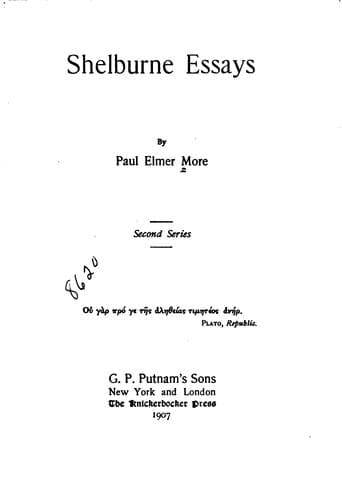
American literature -- History and criticism; English literature -- History and criticism
Out of the bitterness of his soul, out of the wreck of his passions
which, though heroic in intensity, had ended in quailing of the heart,
he sought what the great makers of epic had sought,--a solace and a
sense of uplifted freedom. The heroic ideal was gone, the refuge of
religion was gone; but, passing to the opposite extreme, by showing the
power of the human heart to mock at all things, he would still set forth
the possibility of standing above and apart from all things. He, too,
went beyond the limitations of destiny by laughter, as Homer and Virgil
and Milton had risen by the imagination. And, in doing this, he wrote
the modern epic.
We are learning a new significance of human life, as I said; and the
sublime audacities of the elder poets in attempting to transcend the
melancholia of their day are growing antiquated, just as Byron's heroic
mockery is turning stale. In a few years we shall have come so much
closer to the mysteries over which the poets bungled helplessly, that we
can afford to forget their rhapsodies. Meanwhile it may not be amiss to
make clear to ourselves the purpose and character of one of the few, the
very few, great poems in our literature.
LAURENCE STERNE
A number of excellent editions of our standard authors have been put
forth during the last two or three years, but none of them, perhaps, has
been of such real service to letters as the new Sterne edited by
Professor Wilbur L. Cross.[8]
Ordinarily the fresh material advertised in these editions is in large
measure rubbish which had been deliberately discarded by the author and
whose resuscitation is an impertinence to his memory. Certainly this is
true of Murray's new Byron; it is in part true of the great editions of
Hazlitt and Lamb recently published, to go no further afield. But with
Sterne the case is different. The _Journal to Eliza_ and the letters now
first printed in full from the "Gibbs manuscript" are a genuine aid in
getting at the heart of Sterne's elusive character. Even more important
is the readjustment of dates for the older correspondence, which the
present editor has accomplished at the cost of considerable pains, for
the setting back of a letter two years may make all the difference
between a lying knave and an unstable sentimentalist. In the spring of
1767, just a year before his death, Sterne was inditing those rather
sickly letters and the newly published _Journal_ to Eliza, a susceptible
young woman who was about to sail for India. "The coward," says
Thackeray, "was writing gay letters to his friends this while, with
sneering allusions to his poor foolish _Brahmine_. Her ship was not out
of the Downs, and the charming Sterne was at the 'Mount Coffee-House,'
with a sheet of gilt-edged paper before him, offering that precious
treasure, his heart, to Lady P----." It is an ugly charge, and indeed
Thackeray's whole portrait of the humourist is harshly painted. But
Sterne was not sneering in other letters at his "Brahmine," as he called
Public-domain text, read in full here on John Shaqi.
Reviews
Reviews
No reviews yet
Be the first to share your thoughts on this work.
Elsewhere in the archive
Join the Discussion
Join the discussion
Sign in to leave a comment or review.
Sign InorCreate an account