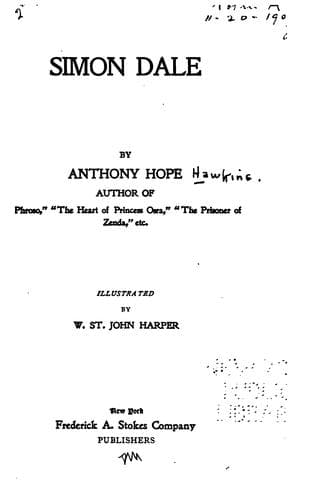
Great Britain -- History -- Charles II, 1660-1685 -- Fiction
Bright dawned that day as I, with brighter brightness in my heart,
climbed the stairs that led to my bedroom. But as I reached the door of
it, I paused. There came a sound from the little closet beyond, where
Jonah stretched his weary legs, and, as I hoped, had forgotten in
harmless sleep the soul that he himself tormented worse than would the
hell he feared. No, he did not rest. From his closet came low, fervent,
earnest prayers. Listening a minute, half in scorn, half in pity, and in
no unkindness, I heard him.
"Praise be to God," he said, "Who maketh the crooked places straight,
and openeth a path through the wilderness, and setteth in the hand of
His servant a sword wherewith to smite the ungodly even in high places."
What crooked places were made straight, what path opened, what sword set
in Jonah's hand? Of the ungodly in high places there was no lack in the
days of King Charles. But was Jonah Wall to smite them? I opened my door
with a laugh. We were all mad that night, and my madness lasted till the
morning. Yes, till the morning grew full my second dream was with me.
CHAPTER IX
OF GEMS AND PEBBLES
How I sought her, how I found her, that fine house of hers with the lawn
round it and the river by it, the stare of her lackeys, the pomp of her
living, the great lord who was bowed out as I went in, the maid who
bridled and glanced and laughed--they are all there in my memory, but
blurred, confused, beyond clear recall. Yet all that she was, looked,
said, aye, or left the clearer for being unsaid, is graven on my memory
in lines that no years obliterate and no change of mind makes hard to
read. She wore the great diamond necklace whose purchase was a fresh
text with the serious, and a new jest for the wits; on her neck it
gleamed and flashed as brilliantly and variously as the dazzling turns
in her talk and the unending chase of fleeting moods across her face.
Yet I started from my lodging, sworn to win her, and came home sworn to
have done with her. Let me tell it; I told it to myself a thousand times
in the days that followed. But even now, and for all the times that the
scene has played itself again before my unwilling eyes, I can scarcely
tell whence and how at the last, the change came. I think that the pomp
itself, the lord and the lackeys, the fine house, and all her state
struck as it were cold at my heart, dooming to failure the mad appeal
which they could not smother. But there was more; for all these might
have been, and yet not reached or infected her soul. But when I spoke to
her in words that had for me a sweetness so potent as to win me from all
hesitation and make as nothing the whole world beside, she did not
understand. I saw that she tried to understand; when she failed, I had
failed also. The flower was dead; what use then to cherish or to water
it? I had not thought it was dead, but had prayed that, faded and choked
though it were, yet it might find life in the sunshine of my love and
the water of her tears.
Public-domain text, read in full here on John Shaqi.
Reviews
Reviews
No reviews yet
Be the first to share your thoughts on this work.
Elsewhere in the archive
Join the Discussion
Join the discussion
Sign in to leave a comment or review.
Sign InorCreate an account