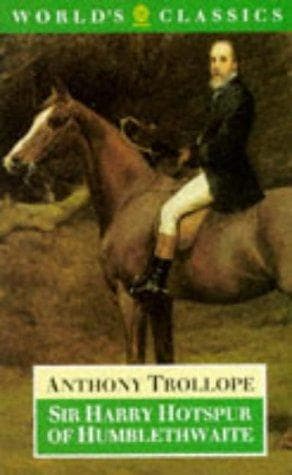
Sir Harry Hotspur of HumblethwaiteTrollope, Anthony
General
Sir Harry Hotspur of Humblethwaite
Trollope, Anthony
Cumberland (England) -- Fiction; Domestic fiction; Fathers and daughters -- Fiction; Inheritance and succession -- Fiction
"It is a thing absolutely not to be thought of," he said; and then he
left her. What was he to do? He could take her abroad, no doubt, but
were he to do so in her present humour, she would, of course, relapse
into that cold, silent, unloving, undutiful obedience which had been
so distressing to him. She had made a great request to him, and he
had not absolutely refused it. But the more he thought of it the more
distasteful did it become to him. You cannot touch pitch and not be
defiled. And the stain of this pitch was so very black! He could pay
money, if that would soothe her. He could pay money, even if the man
should not accept the offer made to him, should she demand it of him.
And if the man would reform himself, and come out through the fire
really purified, might it not be possible that at some long future
time Emily should become his wife? Or, if some sort of half promise
such as this were made to Emily, would not that soften her for
the time, and induce her to go abroad with a spirit capable of
satisfaction, if not of pleasure? If this could be brought about,
then time might do the rest. It would have been a delight to him to
see his daughter married early, even though his own home might have
been made desolate; but now he would be content if he thought he
could look forward to some future settlement in life that might
become her rank and fortune.
Emily, when her father left her, was aware that she had received
no reply to her request, which she was entitled to regard as
encouraging; but she thought that she had broken the ice, and that
her father would by degrees become accustomed to her plan. If she
could only get him to say that he would watch over the unhappy one,
she herself would not be unhappy. It was not to be expected that she
should be allowed to give her own aid at first to the work, but she
had her scheme. His debts must be paid, and an income provided for
him. And duties, too, must be given to him. Why should he not live
at Scarrowby, and manage the property there? And then, at length, he
would be welcomed to Humblethwaite, when her own work might begin.
Neither for him nor for her must there be any living again in London
until this task should have been completed. That any trouble could be
too great, any outlay of money too vast for so divine a purpose, did
not occur to her. Was not this man the heir to her father's title;
and was he not the owner of her own heart? Then she knelt down and
prayed that the Almighty Father would accomplish this good work for
her;--and yet, not for her, but for him; not that she might be happy
in her love, but that he might be as a brand saved from the burning,
not only hereafter, but here also, in the sight of men. Alas,
dearest, no; not so could it be done! Not at thy instance, though thy
prayers be as pure as the songs of angels;--but certainly at his, if
only he could be taught to know that the treasure so desirable in thy
Public-domain text, read in full here on John Shaqi.
Reviews
Reviews
No reviews yet
Be the first to share your thoughts on this work.
Elsewhere in the archive
Join the Discussion
Join the discussion
Sign in to leave a comment or review.
Sign InorCreate an account